

 Sales:
 Customer Service:

Smart Hacks to Organize Your Kitchen With Limited Cabinet Space

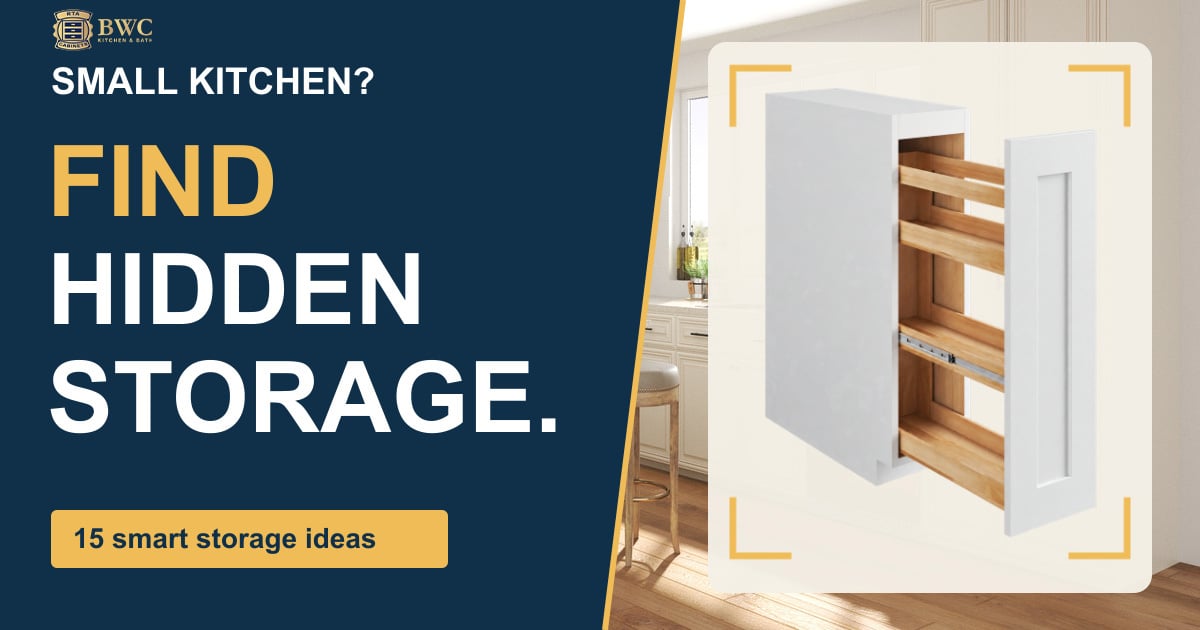
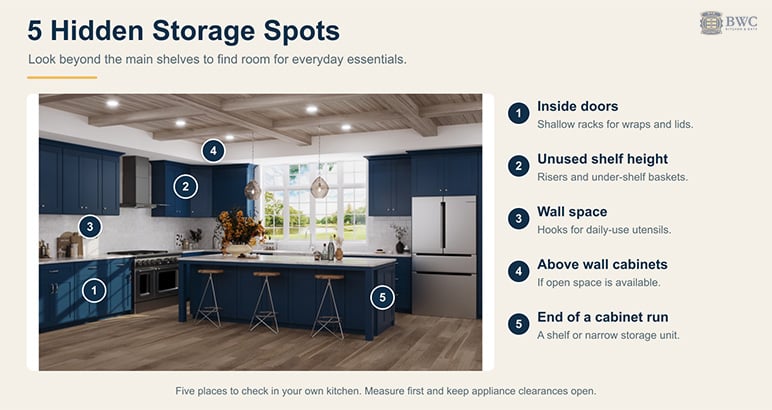
To organize a small kitchen with limited cabinet space, measure what you have, clear out what you do not use, and then move storage onto every surface that is not a shelf: the inside of cabinet doors, the walls, the space above the cabinets and fridge, and the gaps at the end of a cabinet run. Inside the cabinets, add shelf risers, under-shelf baskets and pull-outs so each shelf holds two layers instead of one, and keep the counter for the two or three appliances you use every day.
A small kitchen rarely lacks space. It lacks usable space: tall gaps above short stacks, deep shelves where the back is out of reach, bare walls and empty cabinet doors. This guide covers where the hidden storage is, a step-by-step plan, 15 small kitchen storage ideas, how to choose organizers that fit, what to do without a pantry, and when it makes sense to add cabinets.
Small Kitchen Storage at a Glance
| Space | What to add | Good for |
|---|---|---|
| Inside cabinet doors | Narrow racks, hooks, lid holders | Spices, lids, foil and wrap, cleaning gloves |
| Upper shelves | Shelf risers, under-shelf baskets | Plates and mugs on two levels, towels, snacks |
| Deep base cabinets | Pull-out bins or roll-out trays | Pots, small appliances, cleaning supplies |
| Walls | Rails with hooks, a magnetic knife strip, a small shelf | Utensils, knives, mugs, everyday pans |
| Above cabinets and fridge | Baskets or bins with labels | Items you use a few times a year |
| End of a cabinet run | An open end shelf or a narrow pull-out | Cookbooks, oils, spices, jars |
| Counter | Only daily appliances, a tray for oils | Coffee maker, dish rack, one prep zone |
Before You Buy Organizers: Measure and Sort
- Take inventory. Open every cabinet and drawer and note what you use daily, weekly and almost never. The almost-never pile is where most of your space is.
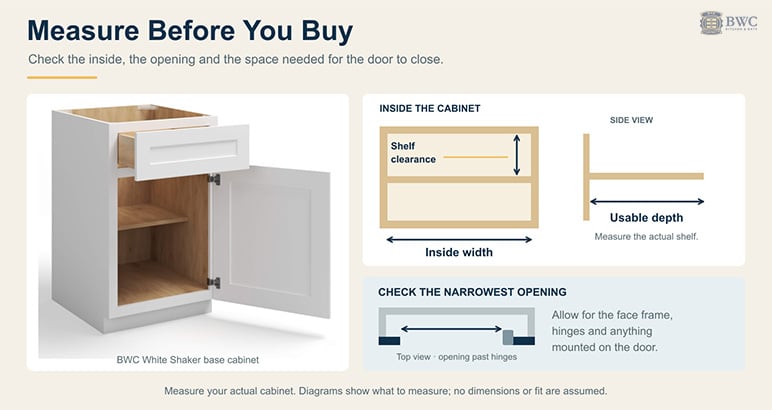
- Measure each cabinet. Write down the width, height and depth of the inside, and the clearance between shelves. Measure the inside of each door too, because a door rack has to clear the shelves when the door closes.
- Find the problem spots. Look for shelves where you cannot see the back, drawers that turn into a jumble, and a counter covered in appliances you use once a week. Those are the places organizers help. A full cabinet of things you never use is not an organizing problem; it is a decluttering one.
How to Organize a Small Kitchen, Step by Step
- Declutter first. Keep one of each tool, donate duplicates, and move holiday dishes and rarely used appliances out of the kitchen or up high.
- Clear the counter. Leave out only what you use every day. Everything else earns a cabinet or a wall hook.
- Group by task. Coffee, baking, cooking, cleaning and food storage each get one zone, close to where you use them.
- Put daily items at eye level. Heavy items go low, rarely used items go high.
- Add the organizers you measured for. Risers and baskets on shelves, racks on doors, pull-outs in deep base cabinets.
- Move what is left to the walls. Rails, hooks and a magnetic strip take utensils, knives and pans out of the cabinets altogether.
15 Small Kitchen Storage Ideas
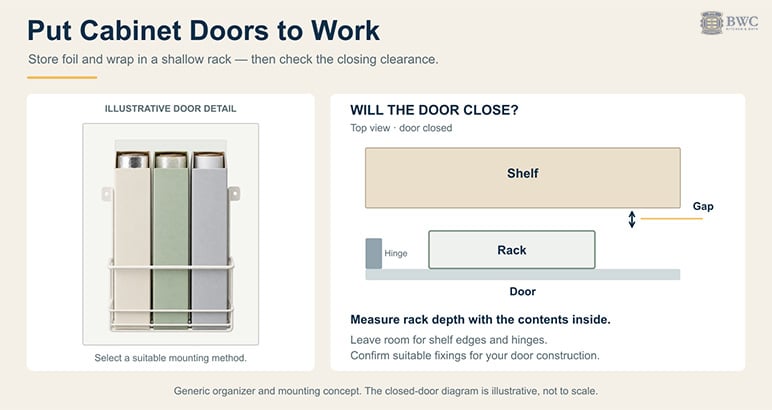
- Cabinet door organizers. Narrow racks and hooks on the inside of doors hold spices, lids and foil without taking shelf space.
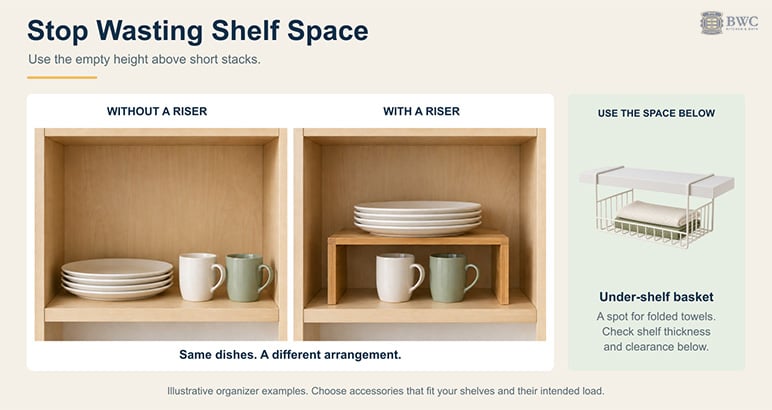
- Shelf risers. A riser splits one tall shelf into two, so small plates, mugs and cans stop being stacked on top of each other.
- Under-shelf baskets. They clip onto an existing shelf and use the empty air below it for towels, wraps or snacks.
- Adjustable shelves. Moving a shelf up or down by a few inches often fits a whole extra row of jars.
- Hooks for mugs and utensils. Mugs under an upper cabinet and utensils on a rail free a shelf and a drawer.
- A lazy Susan in the corner. One turn brings the back of a corner cabinet to the front, so nothing gets lost there.
- Drawer dividers. A divided drawer holds twice as many utensils as a loose one, and you can see all of them.
- Pull-out bins or trays. In deep base cabinets, a pull-out brings the back of the shelf to you instead of making you crouch and reach.
- Tension rods. One under the sink hangs spray bottles; two or three set vertically in a cabinet hold baking sheets and cutting boards on edge.
- A clear counter. Keeping only daily appliances out makes the kitchen feel bigger and gives you one full prep zone.
- Clear, labeled containers. Square containers stack and line up; bags and boxes do not. You also see at a glance what you are out of.
- Daily items at eye level. The easiest shelf to reach should hold what you use every day, not what you bought last.
- Hanging pots and pans. A rail or rack on an empty wall stores the pans that take the most cabinet space.
- The space above the fridge and cabinets. Baskets with labels turn it into storage for things you use a few times a year.
- A rolling cart. A narrow cart that slides into a gap next to the fridge or at the end of the counter adds a pantry shelf, a coffee station or extra prep space.
How to Choose Kitchen Cabinet Organizers
Buy organizers for a specific problem, and measure before you buy. The inside of a cabinet is smaller than the outside: allow for the face frame on framed cabinets, the hinges and anything mounted on the door.
| Problem | Organizer | Measure first |
|---|---|---|
| Tall shelf with short stacks | Shelf riser | Shelf depth and the clearance between shelves |
| Wasted air below a shelf | Under-shelf basket | Shelf thickness and the height of what goes in it |
| Can’t reach the back of a base cabinet | Pull-out bin or roll-out tray | Inside width at the opening, past the hinges |
| Spices everywhere | Door rack, tiered step shelf or a narrow pull-out | Door depth to the shelf edge |
| Lids and sheet pans falling over | Vertical dividers or a lid rack | Inside height and depth |
| Deep corner cabinet | Lazy Susan or turntable | The door opening, not just the cabinet size |
| Loose utensils | Drawer dividers | Inside drawer width, depth and height |
How to Store Utensils and Pots Without Cabinet Space
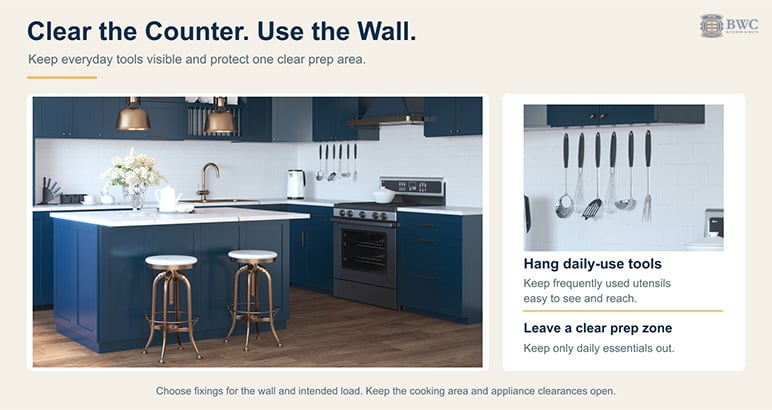
When the cabinets are full, the walls are the next best storage:
- A rail with S-hooks under an upper cabinet or on the backsplash holds spatulas, ladles, whisks and mugs.
- A magnetic knife strip frees a drawer and keeps knives off the counter.
- A utensil crock next to the stove holds the tools you use every time you cook.
- A pot rack or a row of hooks on an empty wall holds the two or three pans you use most; lids can go on a door-mounted rack.
- A small wall shelf above the counter holds oils, salt and the spices you reach for daily.
How to Organize a Small Kitchen Without a Pantry
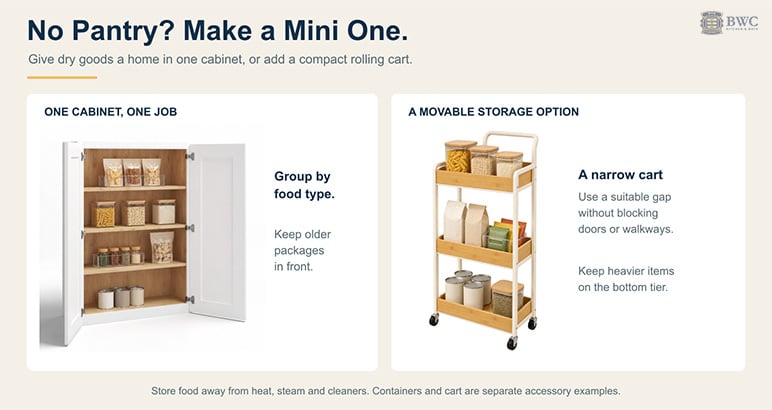
- Choose one cabinet as the pantry. Put it away from the stove and dishwasher, where heat and steam shorten shelf life.
- Decant into clear containers. Rice, pasta, flour and cereal in square containers take less space than their boxes.
- Use shelf risers and door racks in the pantry cabinet for cans and spice jars.
- Keep the oldest in front. New packages go behind the old ones, so nothing expires at the back.
- Add a rolling cart or a tall cabinet if one shelf is not enough. A tall pantry cabinet fits a lot of food into a narrow footprint.
Small Kitchen Layout: What Works and What to Avoid
In a small kitchen, keep the sink, the stove and the fridge close together, with at least one clear stretch of counter between the sink and the stove for prep. Galley and L-shaped layouts use a small room best, because every wall does a job.
Common mistakes:
- Filling the counter with appliances you use once a week, which leaves nowhere to prep.
- Leaving the space above the wall cabinets empty, when labeled baskets or taller wall cabinets could turn it into storage.
- Buying organizers before measuring, so they do not fit or block the door.
- Ignoring the doors, walls and the end of the cabinet run, which are free storage in a small kitchen.
- Storing food next to the stove, where heat shortens its shelf life.
When It Is Time to Add Storage
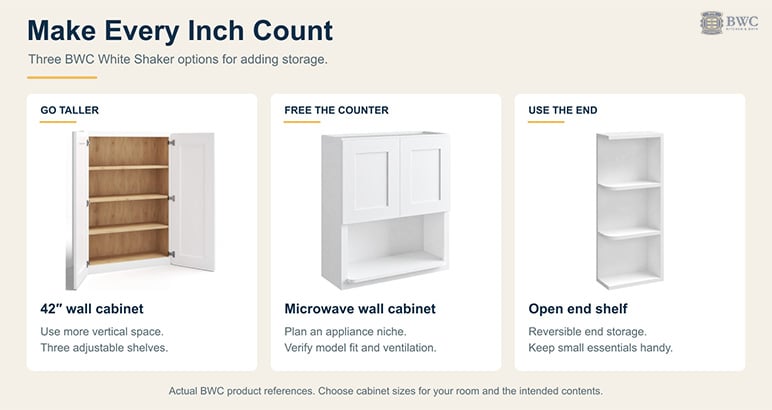
If you have organized every shelf and the kitchen is still short on space, the cabinets themselves are the limit. The changes that add the most storage in a small footprint:
- Taller wall cabinets. Wall cabinets that run to the ceiling add a full shelf of storage along every wall. Our White Shaker 42″ H double door wall cabinet comes in five sizes; see the pros and cons of kitchen cabinets to the ceiling before you decide.
- A microwave wall cabinet. Moving the microwave off the counter frees the most valuable space in a small kitchen. Our White Shaker microwave wall cabinet comes in three sizes.
- An open end shelf. The end of a cabinet run is often wasted; our White Shaker open end shelf is reversible and comes in three sizes, for cookbooks, oils and jars.
- A narrow spice pull. Our White Shaker spice pull base cabinet is 6 or 9 inches wide, so it turns a narrow gap at the end of a run into spice storage.
- A tall pantry cabinet in place of a base and wall cabinet. Browse our pantry cabinets and wall cabinets by size.
For what goes inside each cabinet once you have it, see our guide on how to organize kitchen cabinets. Our RTA cabinets ship flat in 7–10 business days nationwide, at up to 40% less than big-box pricing.
How to Keep a Small Kitchen Organized
- One in, one out. When a new gadget comes in, an old one leaves.
- A weekly five-minute reset. Put back what drifted onto the counter and wipe the shelves you use most.
- A seasonal clear-out. Every few months, check the back of each cabinet and the space above the fridge for things you no longer use.
Frequently Asked Questions
How do I organize a small kitchen with limited cabinet space?
Declutter first, then use the space that is not a shelf: cabinet doors, walls, the top of the fridge and the end of the cabinet run. Inside the cabinets, add shelf risers, under-shelf baskets and pull-outs, and keep only daily appliances on the counter.
What are the best storage solutions for small kitchens?
Shelf risers, under-shelf baskets, door-mounted racks, pull-out bins in deep base cabinets, a lazy Susan in the corner, wall rails with hooks, a magnetic knife strip, and a narrow rolling cart. If you are replacing cabinets, wall cabinets that run to the ceiling add the most storage.
How do you choose kitchen cabinet organizers?
Start from the problem, not the product: a riser for a tall shelf with short stacks, a pull-out for a deep base cabinet, a door rack for spices, vertical dividers for sheet pans. Measure the inside of the cabinet, the door clearance and the opening past the hinges before you buy.
How do you organize a small kitchen without a pantry?
Pick one cabinet away from the stove as the pantry, decant dry goods into clear square containers, add risers and a door rack, and keep the oldest packages in front. A rolling cart or a tall pantry cabinet adds capacity if one cabinet is not enough.
How do you store kitchen utensils without cabinets?
Use the walls: a rail with S-hooks, a magnetic knife strip, a utensil crock next to the stove and a small shelf for oils and spices. Hooks under an upper cabinet can hold mugs.
How do you organize narrow kitchen cabinets?
Use narrow cabinets for things that stand on edge or line up in rows: baking sheets and cutting boards between vertical dividers, or spices and oils on a narrow pull-out.
What is the ideal layout for a small kitchen?
A galley or L-shaped layout, with the sink, stove and fridge close together and one clear stretch of counter between the sink and the stove for prep.
What are common mistakes in small kitchen layouts?
Filling the counter with appliances, leaving the space above the wall cabinets empty when labeled baskets or taller wall cabinets could turn it into storage, buying organizers before measuring, leaving doors and walls unused, and storing food next to the stove.