





 Sales:
 Customer Service:

Modern Farmhouse Kitchen: What the Style Actually Requires

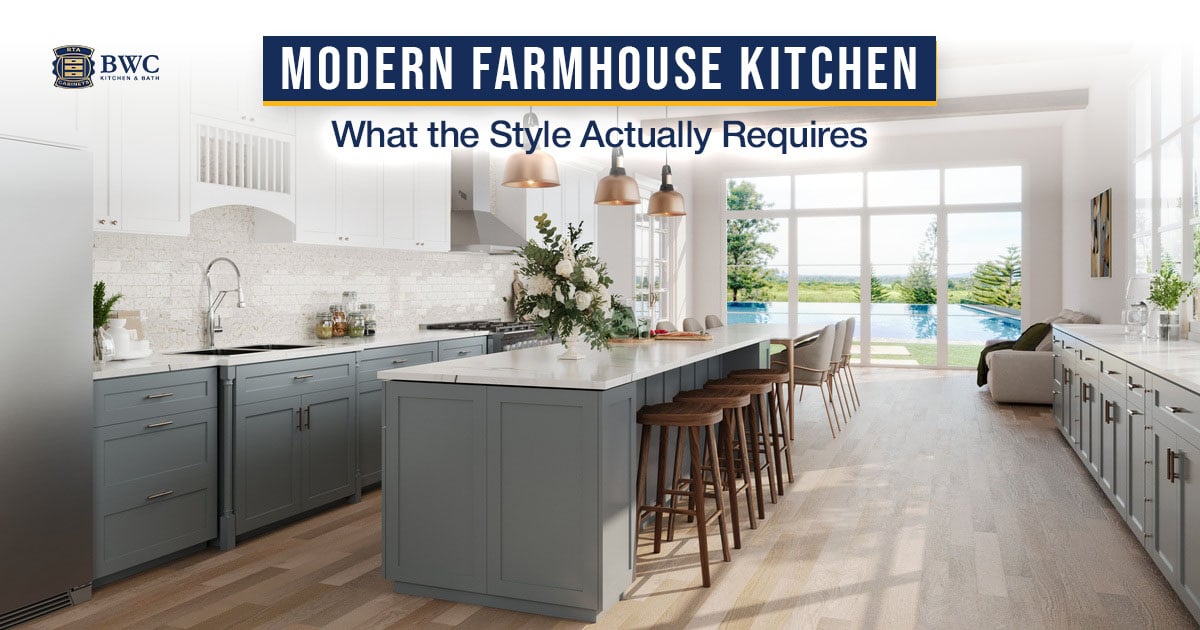
A modern farmhouse kitchen combines a clean, contemporary layout with a few warm farmhouse elements: white or softly colored shaker cabinets, an apron-front sink, simple black or brass hardware, a low-maintenance quartz countertop, and one or two natural wood accents. What separates it from a traditional farmhouse kitchen is restraint. Pick three or four of these elements, commit to them, and leave the rest of the room calm.
The modern farmhouse kitchen is easy to get wrong. Scroll through Pinterest for five minutes and you will see the problem: barn doors on every wall, mason jars on every shelf, and a rooster on the counter for good measure. That is not a modern farmhouse.
The style works because it balances warmth with restraint. It pulls specific elements from traditional farmhouse kitchens (natural materials, apron-front sinks, open shelving) and strips away the clutter. The result is clean, functional, and warm without tipping into costume territory. Here is what it actually takes to get there.
Modern Farmhouse vs. Rustic Farmhouse: The Real Difference
This is where most people get confused, so let’s clear it up.
A traditional or rustic farmhouse kitchen leans heavily into rustic charm. Think knotty pine cabinets, antique hardware, plate racks, distressed finishes, and maybe a wood-burning stove. The look is layered, collected over time, and deliberately imperfect. A rustic farmhouse kitchen works in a 1920s New England farmhouse, but it looks entirely out of place in a recent suburban new build.
A modern farmhouse kitchen keeps the architectural warmth but edits aggressively. The bones are clean, structural, and contemporary. Shaker cabinets take the place of raised panels. Quartz replaces butcher block, or butcher block is kept to an accent rather than the primary surface. Hardware is intentional and streamlined, not highly decorative. The palette relies on clean contrast, not neutral layered over neutral.
The simplest way to think about it: traditional farmhouses are additive. Modern farmhouses are subtractive. You start with a clean, modern kitchen and layer in just enough farmhouse warmth to give the home real character.
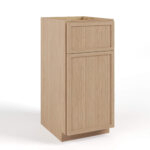
If you want some of the rustic warmth without the distressed look, put it in the wood tone rather than in a faux-aged finish. A wood-grain shaker door, used on an island or a single run, brings the farmhouse feel while the rest of the kitchen stays clean.
The Core Design Elements
A farmhouse style kitchen that holds up over time is built from a short list of foundational pieces. The secret is restraint: do not use all of them at once. Pick three or four core features and commit.
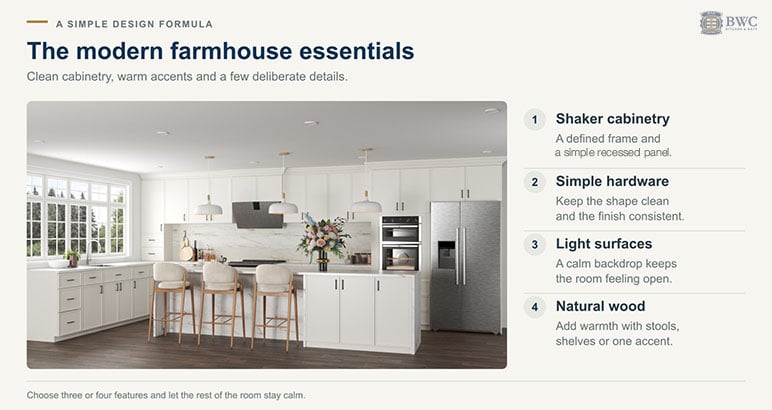
Shaker Cabinets
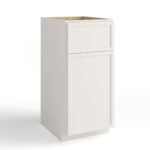
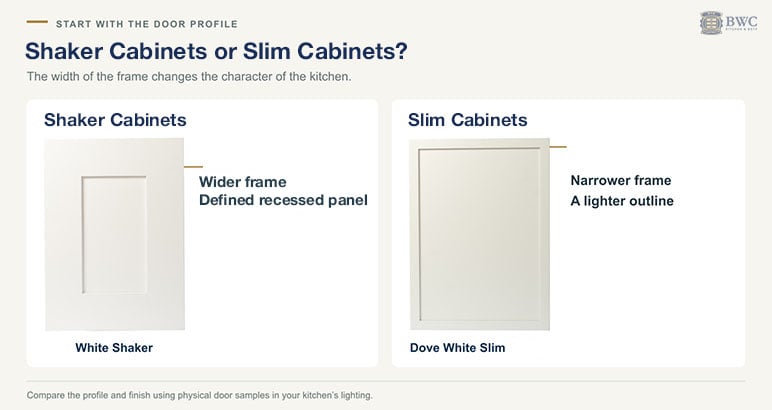
This is the non-negotiable anchor. The five-piece shaker door is the backbone of every well-executed modern farmhouse kitchen. It reads as clean and classic without being sterile. White shaker is the default for a clear reason: it reflects light, pairs with any countertop material, and will not date itself within five years.
Avoid distressed or glazed finishes. They pull the look toward a country farmhouse kitchen, which is a different design language entirely. If you want warmth, choose a warm white or soft gray rather than adding a faux-aged finish to a bright white door.
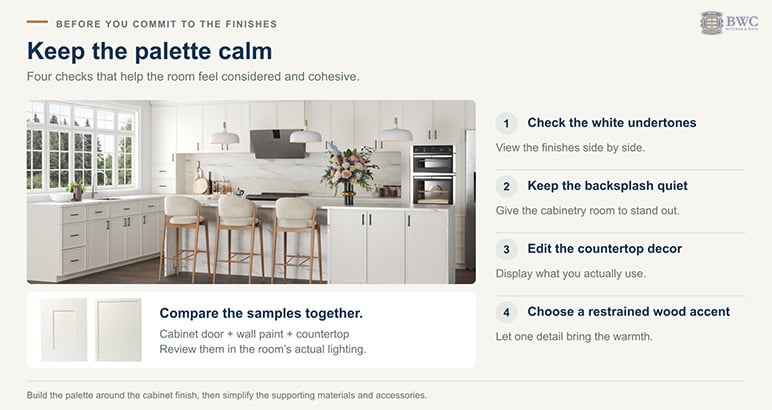
Pay attention to the white undertone. For a true modern farmhouse look, you want a clean white or a slightly warm white with faint gray undertones. White shaker cabinets are the usual starting point; compare the door against your wall paint and countertop sample before you commit to a full kitchen.
The Apron-Front Sink
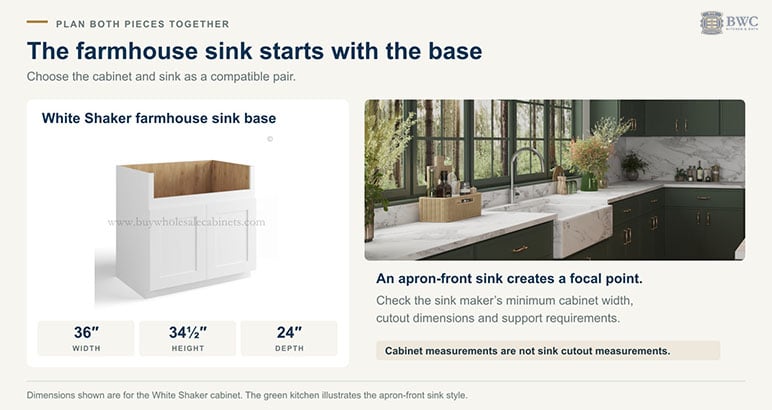
The farmhouse sink is the signature structural piece, and it easily earns its place. A single-bowl fireclay or cast iron apron-front sink in bright white is the classic move. It is highly functional (large enough to soak sheet pans easily) and visually grounds the window run.
Plan the sink and the cabinet together. An apron-front sink sits in a dedicated farmhouse sink base with a lowered front, and every sink maker lists the cabinet width its sink needs. Confirm that width before you order either piece, not after. Our White Shaker farmhouse sink base measures 36 inches wide, 34.5 inches high and 24 inches deep, so check your sink’s specifications against those numbers.
Hardware That Creates Contrast
Hardware is where modern farmhouse kitchens separate themselves from dated country kitchens. Skip the cup pulls with artificial patina and the heavy wrought iron external hinges.
The two hardware finishes that work best for this look are:
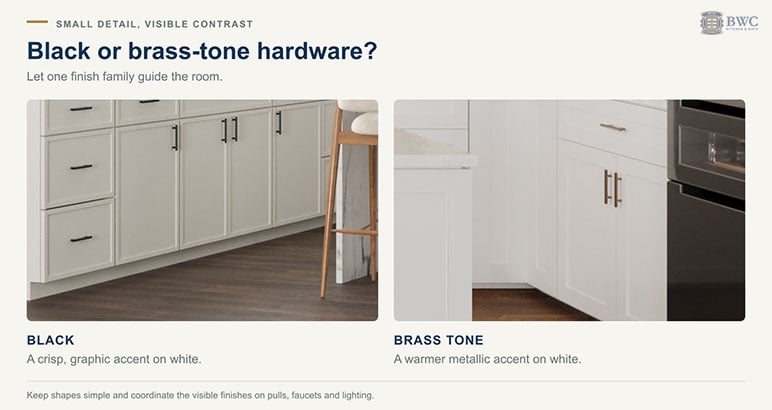
- Matte black: clean, graphic contrast against white or light gray shaker cabinets. Stick to simple bar pulls or geometric knobs.
- Brushed brass or champagne bronze: warmer, softer, and slightly more elevated. This finish works well in farmhouse kitchens that lean slightly transitional.
Pick one metal finish family and use it consistently across your cabinet hardware, faucet, and light fixtures. Mixing metals works in other styles, but a modern farmhouse kitchen reads as intentional when the metal stays consistent. If you do add a second finish, keep it to one area, such as the island.
Countertops: Quartz Over Butcher Block (Usually)
Butcher block gets recommended in almost every farmhouse kitchen article. Here is the honest take: it looks great in staged photos and needs real maintenance in daily life. It needs regular oiling, it stains around the sink rim, and it can show permanent water damage if liquids sit on the wood.
For a primary countertop, a quartz slab in white or light gray with subtle veining gives you the clean look with very little ongoing maintenance. If you love the organic texture of wood, use a walnut butcher block only as an island top or a small prep station. That way, you get the visual payoff without committing the whole kitchen to high-maintenance upkeep.
Open Shelving and Wood Accents, in Moderation
Open shelving is part of the farmhouse vocabulary, but it works best as an accent. One or two floating wood shelves on a single wall, styled with dishes you actually use, reads as farmhouse. A full wall of open shelves reads as a storage problem and collects grease near the range. The same rule applies to reclaimed wood: one element, such as the shelves or a range hood trim, is enough.
The Best Cabinet Colors for a Modern Farmhouse Kitchen
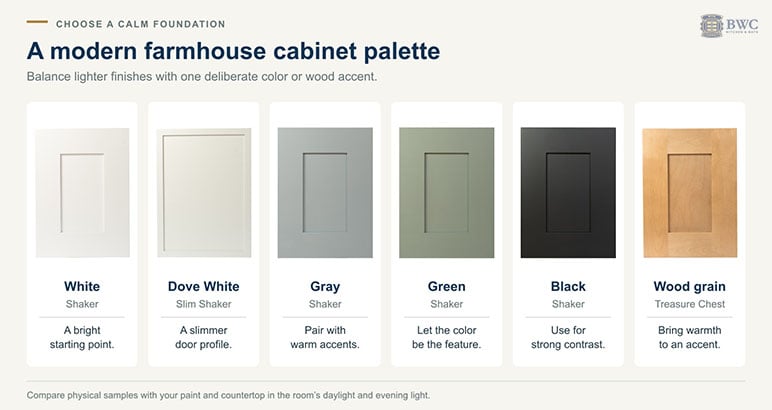
The cabinet color sets the tone for everything else. These are the colors that work, and what each one asks of the rest of the room.
| Cabinet color | Why it works | Watch out for |
|---|---|---|
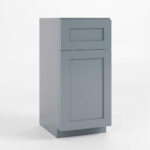
| White shaker | The classic white farmhouse kitchen: bright, clean, and easy to pair with black or brass hardware | A very cool white next to a warm countertop can look blue |
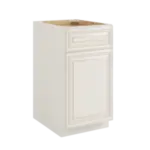
| Dove white slim shaker | A softer white with a slimmer frame, which pushes the look slightly more modern | Check it next to your wall paint so the two whites do not fight |
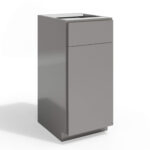
| Gray shaker | A soft, grounded alternative to white that hides everyday wear well | Pair with warm wood or brass so the room does not feel cold |
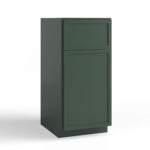
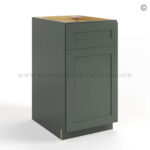
| Sage green | A color drawn straight from the farmhouse palette, calm and earthy | Keep the rest of the palette quiet so the green stays the feature |
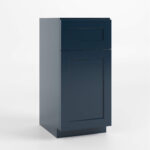
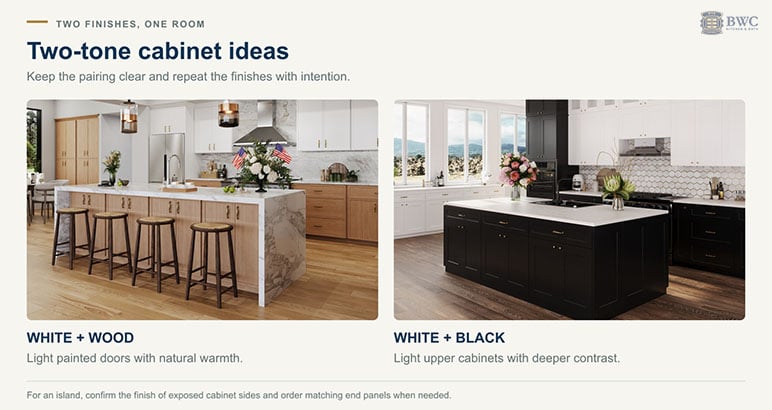
| Black shaker | Strong contrast on an island or lower cabinets under white uppers | An all-black kitchen tips toward moody modern rather than farmhouse |
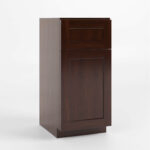
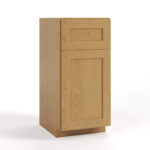
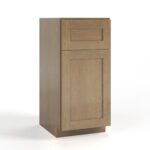
| Rustic wood shaker or Treasure Chest | Wood-grain warmth for an island or a single run, the rustic farmhouse note without distressing | A whole kitchen in wood grain reads traditional, not modern |
A two-tone layout is the most flexible option: white or light perimeter cabinets with a wood, black, or sage island. On an island the cabinet sides are exposed, so check whether the line you choose has finished sides or needs end panels, and add them to the order. Our guide on how to build a kitchen island covers the cabinets that go into one.
Common Mistakes That Kill the Farmhouse Look
| Common design mistake | Practical impact on the space | The fix |
|---|---|---|
| Overdoing the rustic wood | The room feels heavy and dark and tips into a “barn” theme | Limit reclaimed wood to a single element, like floating shelves or a range hood accent |
| Too many cliché accessories | Wire baskets, mason jars, and word-art signs turn the kitchen into a staging set | Edit your counters hard. Display copper, wood cutting boards, or stoneware you actually use |
| Ignoring the white undertones | Yellow-white cabinets next to blue-white countertops create a jarring clash | Review physical samples of your cabinets, paint, and quartz under your room’s actual lighting |
| Backsplash overload | Heavy geometric patterns or colorful glass mosaics compete with the simple cabinetry | Keep the background quiet. Classic white subway tile or handmade-look zellige works best |
How to Keep It From Looking Like Every Other Kitchen on Pinterest
The farmhouse style kitchens that feel original share one thing: they commit to one unexpected design choice. Instead of copying a mood board element by element, pick one unconventional choice and let everything else support it.
- Run matte black shaker cabinets on the lower cabinets while keeping the upper wall cabinets bright white.
- Choose a deep matte concrete-look countertop instead of the usual marble-veined quartz.
- Skip open shelving entirely in favor of fluted glass-front cabinet doors that nod to Scandinavian simplicity.
The modern farmhouse formula does not rely on trends. It comes down to clean architectural lines, warm natural materials, intentional contrast, and the discipline to stop before you add one more thing.
Frequently Asked Questions
What is the difference between a modern farmhouse kitchen and a rustic farmhouse kitchen?
A modern farmhouse kitchen uses clean lines, shaker cabinets, and a restrained neutral palette with high-contrast accents, like matte black hardware on white doors. A rustic farmhouse kitchen leans into distressed finishes, knotty wood grain, vintage country accessories, and a layered, additive look.
What type of cabinets are in a farmhouse kitchen?
Five-piece shaker doors in white, off-white, soft gray, or sage green are the standard. Avoid ornate raised-panel doors and completely flat slab doors. The shaker profile is simple enough to read as contemporary but has enough detail to feel warm.
What color is best for farmhouse kitchen cabinets?
White is the classic choice because it reflects light and works with any countertop and hardware. Soft gray and sage green are the strongest alternatives, and a wood-tone or black island adds contrast without darkening the whole kitchen.
Is modern farmhouse going out of style?
The over-accessorized, sign-heavy version has already dated itself. The core elements, such as shaker doors, apron-front sinks, natural wood accents, and a calm neutral palette, have worked for decades and continue to hold up.
What style is replacing farmhouse?
Many kitchens that would have been farmhouse a few years ago are moving toward transitional and organic modern design. They keep the shaker doors and natural wood but drop the rustic accessories and add more stone and texture.
Can I mix modern farmhouse style with other design styles?
Yes, and doing so creates a more personal space. The best modern farmhouse kitchens borrow from transitional and Scandinavian design. A waterfall-edge island or minimalist light fixtures keep the farmhouse look grounded in the present.
How do you make a small farmhouse kitchen work?
Keep the cabinets light, choose one signature element such as the apron-front sink, and limit open shelving to a single short run. In a small kitchen, every added accessory counts double, so edit the counters even harder than you would in a large one.
Ready to Start Planning?
Order a White Shaker sample door to check the white against your paint and countertop, or browse the full kitchen cabinets catalog. Our RTA cabinets ship flat in 7–10 business days nationwide, at up to 40% less than big-box pricing.