

 Sales:
  Customer Service:
How to Choose a Bathroom Vanity: Buyer’s Guide for 2026

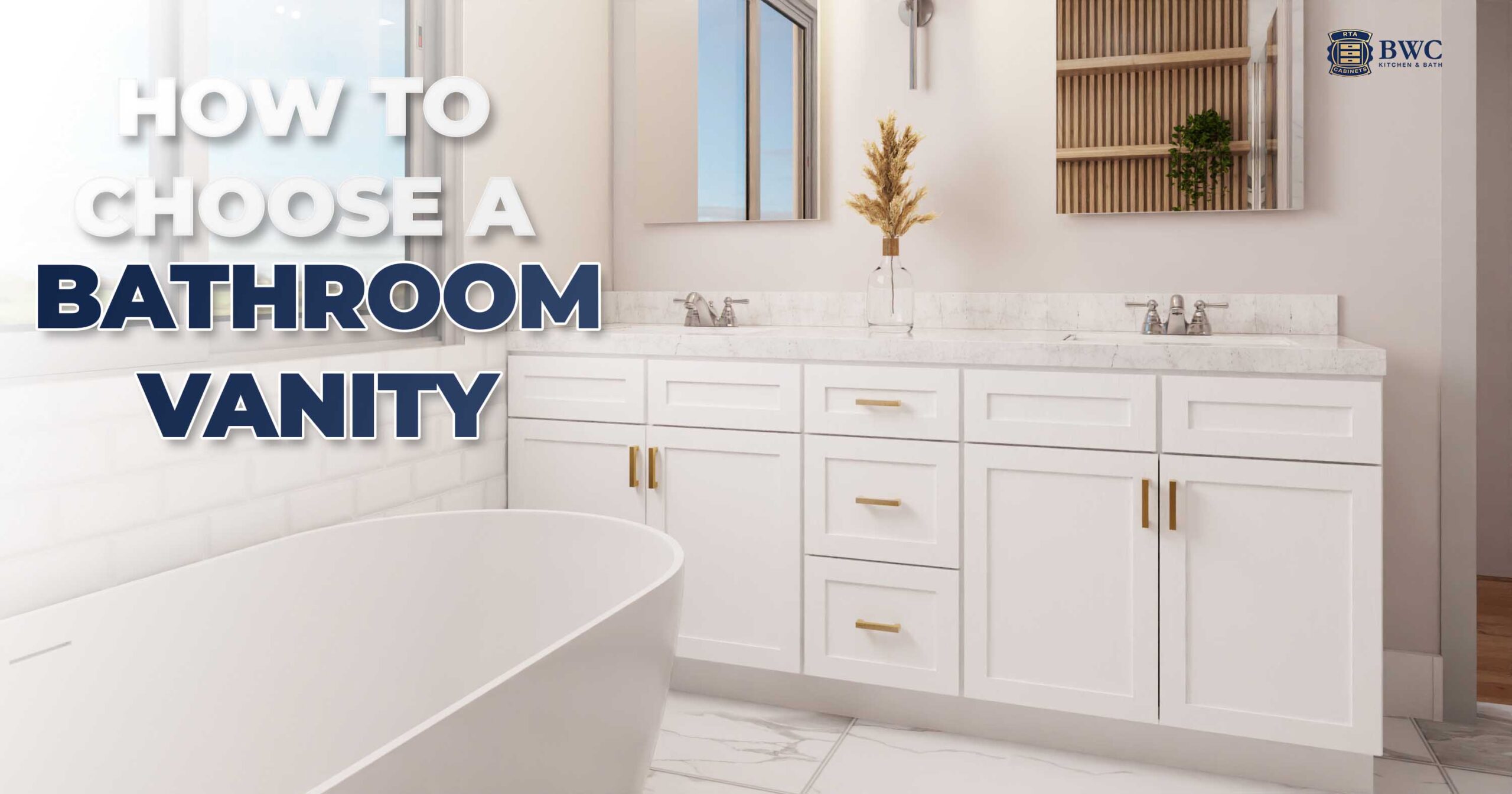
Table of Contents
Choosing the right bathroom vanity requires balancing four technical pillars: spatial dimensions, cabinet construction, plumbing configuration, and moisture resistance. This 2026 guide provides a 6-step framework to help you evaluate wholesale RTA (Ready-to-Assemble) cabinetry against overpriced retail options. We dive deep into the specifications that matter - including 36-inch comfort height standards, all-plywood box durability, and framed vs. frameless accessibility, to help you verify plumbing clearances and ensure long-term structural integrity in high-humidity environments.
The 6-Step Bathroom Vanity Decision Framework
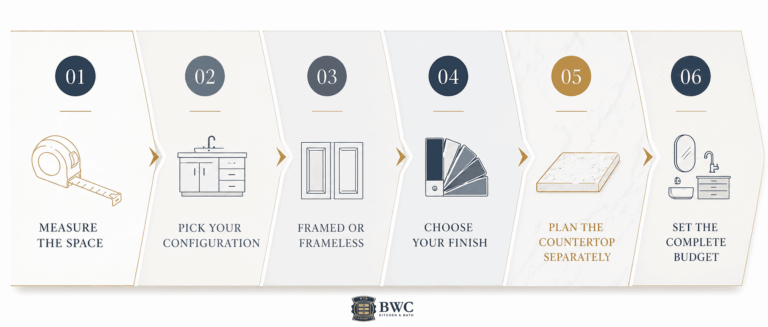
Before you read the full guide, here's the decision path in order. Each step has a full section below.
What Does a Bathroom Vanity Actually Include?
|
Step |
Decision |
|---|---|
|
Measure the space |
Measure the available wall space, subtract 2–3 inches from each side for fillers and scribe molding, then match to the closest standard cabinet size. |
|
Pick your configuration |
Freestanding (DIY-friendly) or floating (renovation only). Single sink base, or sink base + drawer base(s) for a wider run. |
|
Framed or frameless |
Traditional/transitional/shaker → framed. Modern/contemporary → frameless. Quality is equal. |
|
Choose your finish |
White Shaker is the safe default. For modern: navy blue, charcoal, slim oak, or high gloss frameless. |
|
Plan the countertop separately |
Quartz is the best all-around value. Decide material before ordering the cabinet. |
|
Set the complete budget |
Cabinet (25–40% of total) + countertop + sink + faucet + mirror + install. Budget all six upfront. |
Standard vanities consist of a cabinet base purchased separately from the countertop, sink, and faucet - each component chosen and sourced independently for full control over the final configuration.
Component | Included | Notes |
Vanity Cabinet (Base) | Yes | Includes the cabinet box, doors, drawers and hinges. |
Countertop / Vanity Top | No | Almost always purchased separately to match your style. |
Sink | No | Usually purchased with or after the countertop is selected. |
Faucet | No | Always purchased separately to match your bathroom fixtures. |
Mirror / Medicine Cabinet | No | Always purchased separately as a decorative accent. |
Hardware (Pulls/Knobs) | No | Purchased separately as a visual upgrade. |
When you buy an RTA (Ready-To-Assemble) vanity cabinet, you're buying the cabinet base. The countertop, sink, and faucet are sourced and priced separately. This is actually an advantage - you get full control over your countertop material, sink style, and hardware finish without being locked into a single-vendor bundle.
The 4 Types of Bathroom Vanities
Bathroom vanities are categorized into four primary configurations based on mounting style and basin capacity: freestanding, floating, single, and double.
1. Freestanding Vanity (Floor-Mounted)
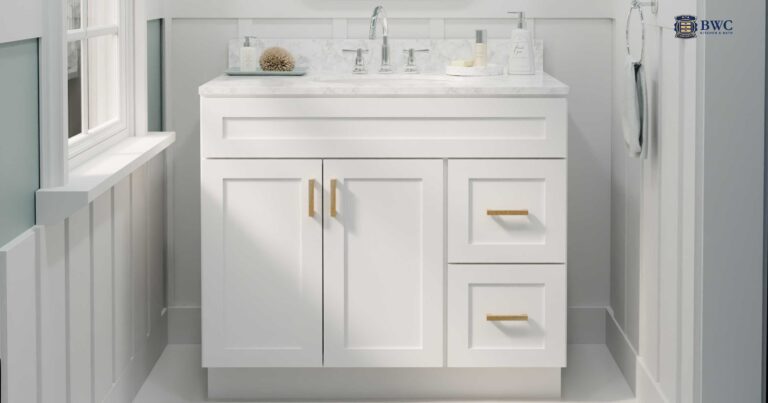
The most common type and the standard in American bathroom design. Sits directly on the floor, connects to your existing plumbing rough-in, and requires no special wall preparation. Available as a sink base (open interior to accommodate drain plumbing) or a drawer base (for storage beside the sink). Cabinet widths range from 12 to 36 inches per unit - sink bases from 21 to 36 inches, drawer bases from 12 to 24 inches. Combine one sink base with one or more drawer bases side by side to build your ideal total run.
Best for: Most bathrooms, most budgets, most DIY projects.
2. Floating Vanity (Wall-Mounted)
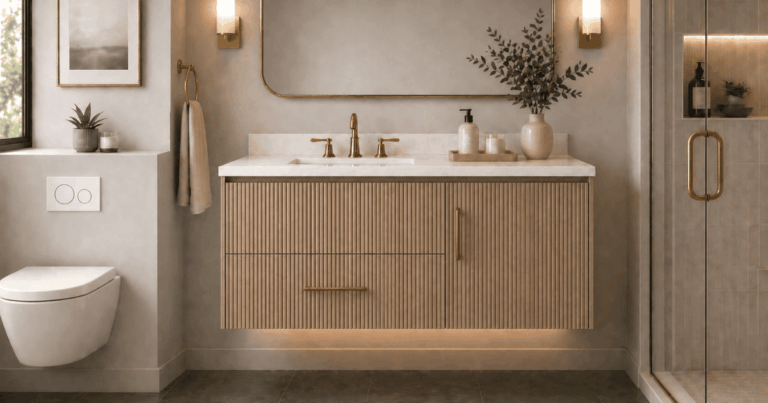
Mounts directly to the wall with no legs touching the floor. Requires wall blocking or reinforcement behind the drywall, which is easiest to add during a full renovation when walls are open. The result is a cleaner, more modern look with visible floor space beneath the cabinet - a strong visual effect in small bathrooms.
Best for: Modern bathrooms undergoing full renovations, small spaces needing visual breathing room.
Note:
Buy Wholesale Cabinets RTA collection is freestanding. For most bathrooms, that's the smarter choice - faster to install, lower labor cost, more storage, and DIY-friendly without wall prep. If you're doing a full-wall renovation and specifically want the floating look, you'll typically source it through a specialty fabricator.
3. Single Sink Vanity
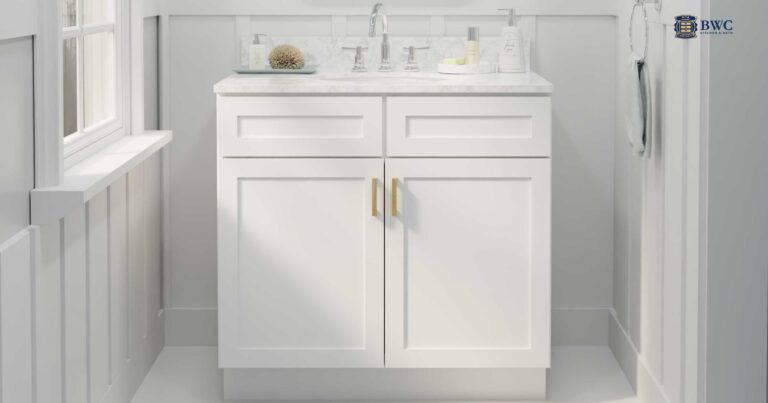
One sink basin, typically on a 24 to 36-inch sink base. The standard choice for guest bathrooms, powder rooms, and any bathroom where one person is the primary user.
Best for: Guest bathrooms, powder rooms, single-user master baths.
4. Double Sink Vanity
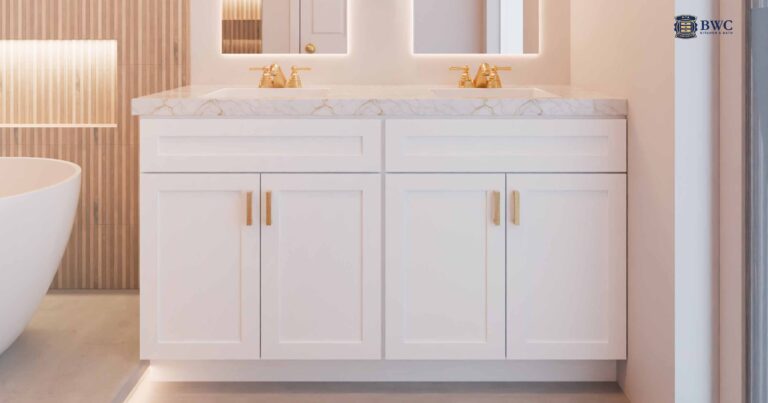
Two sink basins built by combining two sink bases, or a sink base and drawer base(s), to reach 60 inches or more total width. The master bathroom standard for couples and families sharing morning routines.
Best for: Shared master bathrooms, high-traffic family bathrooms.
Bathroom Vanity with Sink: How to Choose the Right Configuration
When shopping for a bathroom vanity with a sink, you're making two decisions at once: the cabinet base and the sink/countertop setup that sits on top. These are almost always purchased separately, which gives you full control over the combination, but requires knowing what works together before you order.
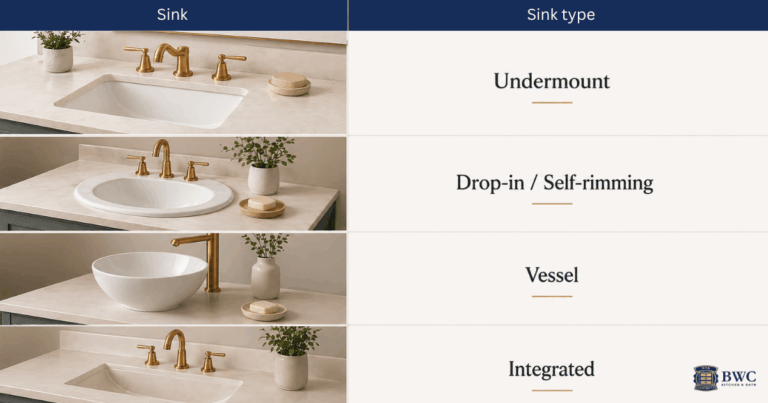
The four sink configurations and when to use each:
Sink Type | How It Mounts | Best For | Countertop Required |
Undermount | Below the counter | Most bathrooms; easy to clean | Stone or quartz only |
Drop-in / Self-rimming | Rim sits on top | Any countertop; easy DIY install | Any material |
Vessel | Sits on top like a bowl | Modern, design-forward bathrooms | Any solid surface |
Integrated | Molded as one piece | Kids' baths or rentals; easy cleaning | N/A - all-in-one |
Undermount - mounts below the countertop with the rim hidden. Creates a seamless, easy-to-wipe surface. The most popular pairing with shaker vanities and quartz tops. Requires a stone or quartz countertop.
Drop-in / Self-rimming - rim sits on top of the counter. Works with any countertop material including laminate. Easiest DIY install. The exposed rim can collect buildup over time.
Vessel - sits on top like a bowl, striking and design-forward. Requires a vessel-height faucet (12+ inches). Adds 5–6 inches to working height - factor this in before ordering.
Integrated - sink and countertop molded as one piece. No seams, no caulk lines, extremely easy to clean. Best option for kids' bathrooms and rentals.
How to Choose the Right Bathroom Vanity Size
Getting the size wrong is the most expensive mistake you can make. A vanity that's too wide won't fit; one that's too narrow wastes wall space and storage. Measure everything before you order anything.
Bathroom Vanity Width
Measure the available wall space, subtract 2–3 inches from each side for clearance, then match to the closest standard size:
Width | Typical Use Case |
12–18" | Drawer base beside a sink base (storage companion, not a standalone vanity) |
21–24" | Small bathroom or powder room (minimum standalone sink base width) |
27–30" | Standard guest or main bath |
33–36" | Larger guest bath, master bath |
60"+ | Shared master bath (two bases combined) |
Bathroom Vanity Height
Standard RTA vanity cabinet boxes are 34½ inches tall. Add a typical 1½ to 2-inch countertop and you land at 36 inches - the modern comfort height.
Bathroom Vanity Depth
Bathroom vanity depth is 21 inches front to back, intentionally shallower than a kitchen base (24 inches) to maintain clearance between the vanity, toilet, and door.
For the full breakdown, exact measurements, clearance requirements, how to measure for plumbing rough-in and sizing for small bathrooms - learn difference between Bathroom Vanity and Kitchen Cabinets →.
Framed vs Frameless Cabinets: Which Is Actually Better?
Neither is objectively better. They're different construction methods that suit different bathroom styles.
Framed Vanity Cabinets
A solid wood face frame is attached to the front of the cabinet box. Door hinges mount to this frame. The face frame adds rigidity and creates the classic, structured look associated with traditional American cabinetry.
- Box: ½" plywood
- Look: Traditional, transitional, shaker, raised panel
- Pros: More affordable, widest style range, classic aesthetic
- Cons: Slightly less interior access due to the face frame width
Frameless Vanity Cabinets
No face frame - doors mount directly to the sides of the cabinet box. Without a face frame, you get full interior access width and a cleaner, more minimal exterior look.
- Box: ¾" plywood (thicker than framed)
- Look: Modern, contemporary, European, minimalist
- Pros: Thicker box, full interior access, painted interior and exterior, sleeker appearance
- Cons: Slightly higher price point
Selection guide:
Traditional, transitional, farmhouse, or shaker bathroom → Framed
Modern, contemporary, European, or minimalist bathroom → Frameless
Vanity Cabinet Materials and Finishes: What Actually Matters
Two material decisions define how your vanity will hold up: the cabinet box material (which determines lifespan) and the countertop material (which determines daily maintenance).
Cabinet Box Material
This is where real quality differences show up - especially in a bathroom, where humidity is a constant.
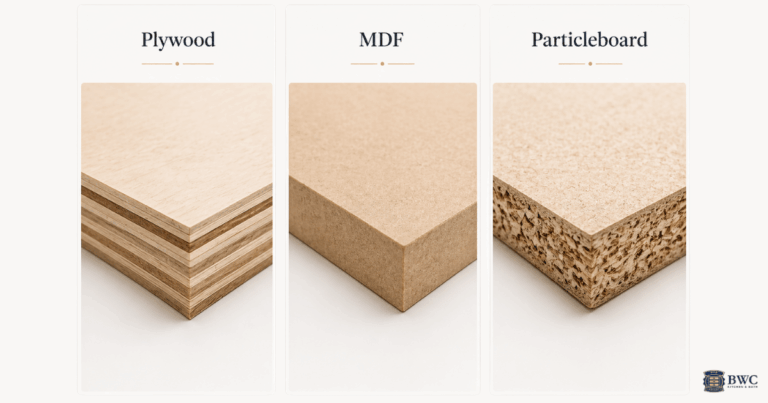
Plywood is the gold standard. Cross-laminated veneers give it dimensional stability even as moisture levels fluctuate. It holds screws well through repeated use, resists delamination, and won't swell the way sheet goods do. A plywood vanity in a properly ventilated bathroom can last 20+ years with basic maintenance.
MDF (Medium Density Fiberboard) paints beautifully and is reasonable for door fronts, but as a cabinet box material in a bathroom, it's a gamble. If the finish cracks or the sealed edges wear, MDF absorbs moisture and swells permanently. MDF door fronts on a plywood box is acceptable. MDF boxes in a humid bathroom are a liability.
Particleboard is the most common material in entry-level big-box vanities. It absorbs moisture faster than MDF, doesn't hold screws reliably after they've been driven once, and fails earliest at hinge and drawer slide mounting points. If a vanity listing doesn't specify the box material, assume it's particleboard.
What to look for:
Plywood box construction is non-negotiable for a bathroom vanity that will last. Door style, finish, and hardware can all be upgraded over time.
Countertop Materials for Bathroom Vanity
The countertop is a separate purchase, and the material choice affects daily maintenance and how long the bathroom looks good.
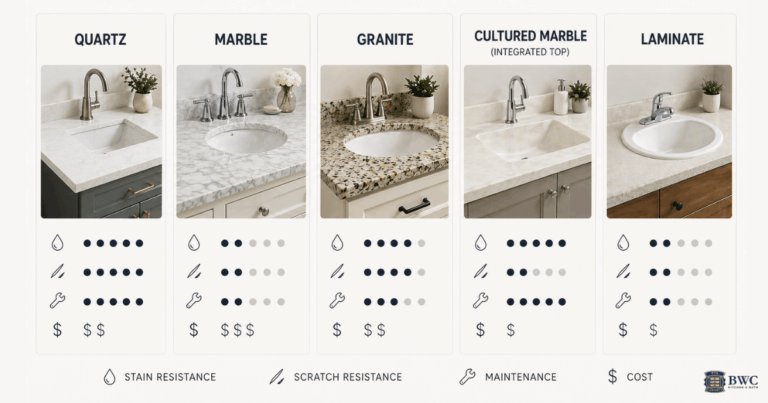
Quartz is the most popular choice for good reason. Non-porous (no sealing needed), scratch-resistant, available in hundreds of patterns. Handles bathroom humidity without special treatment.
Quartz is best for: most bathrooms, most budgets.
Marble is undeniably beautiful, but high maintenance. Porous, needs sealing every 1–2 years, and can etch from toothpaste and acidic cleaners.
Marble is best for: low-traffic bathrooms where the users are careful.
Granite is harder and more stain-resistant than marble with natural variation. Still needs periodic sealing but significantly more forgiving in daily use.
Granite is best for: natural stone look without marble's maintenance demands.
Cultured Marble (Integrated Top) is a sink and countertop as one seamless molded piece. No grout lines, no caulk to maintain, extremely easy to clean. Can scratch and yellow over time and is difficult to repair if damaged.
Cultured Marble is best for: family bathrooms, rentals, easy-clean priority.
Laminate is budget-friendly with a wide pattern range. Cannot be used with an undermount sink (water at the seam causes delamination). Fine with a drop-in sink.
Laminate is best for: secondary bathrooms, tight budgets.
Door and Drawer Construction
Dovetail drawer boxes are the quality benchmark for cabinet drawers. The interlocking joint is significantly stronger than stapled or glued alternatives and won't pull apart under years of daily use.
Soft-close hinges and drawer slides should be standard on any vanity you consider. They extend hardware life, eliminate slamming, and are simply a better daily experience.
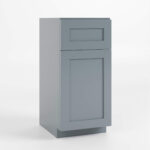
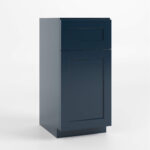
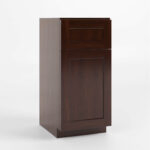
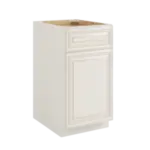
Popular Bathroom Vanity Finishes for 2026
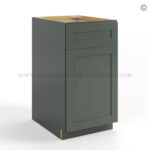
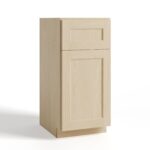
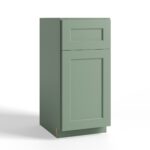
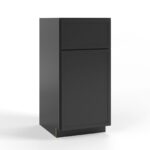
Finish | Style | Best Paired With |
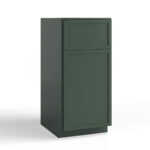
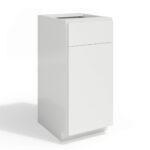
Timeless, versatile | Any tile, any fixture finish | |
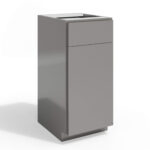
Neutral | Marble, chrome, brushed nickel | |
Warm modern | Warm wood floors, matte black | |
Bold, trending | White countertop, brass fixtures | |
Organic, trending | Natural stone, warm wood, brass | |
Modern, dramatic | White quartz, gold or chrome | |
Softer dark tone | Warm wood accents, brushed gold | |
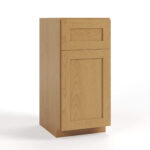
Classic, warm | Travertine, oil-rubbed bronze | |
Biophilic, trending | Concrete, terracotta, brass | |
Ultra-modern | Polished chrome, minimal hardware |
Modern bathroom vanity tip:
For a contemporary or modern design direction, frameless construction with a flat-panel door panel gives cleanest result. Pair with matte black or brushed gold hardware and a quartz or high-gloss integrated top.
Floating vs Freestanding Vanity Cabinets: The Honest Comparison
The floating vanity gets a lot of attention, but it's not always the right choice. Here's a clear-eyed comparison:
When Floating Vanity Makes Sense
- Full renovation with walls open (easy to add blocking at the right height)
- Small bathroom where exposing floor space creates a larger feel
- ADA compliance with custom height requirement
- Budget for professional installation
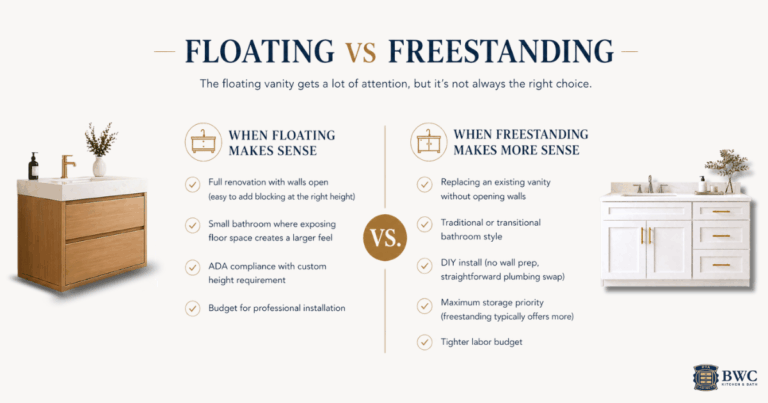
When Freestanding Vanity Makes More Sense
- Replacing an existing vanity without opening walls
- Traditional or transitional bathroom style
- DIY install (no wall prep, straightforward plumbing swap)
- Maximum storage priority (freestanding typically offers more)
- Tighter labor budget
How Much Does a Bathroom Vanity Cost?
A complete bathroom vanity setup - cabinet, countertop, faucet, mirror, and installation - typically runs $600–$1,500 for a standard guest bathroom and $2,000–$4,000+ for a master bathroom double-sink run.
Vanity Cabinet Cost at a Glance
Source | Price Range (Single Sink) | Construction |
BuyWholesaleCabinets (RTA) | $200–$600 | Plywood boxes, soft-close hardware |
Big Box Retail | $300–$1,200 | Often particleboard |
Semi-Custom | $800–$2,500 | More sizes and finish options |
Full Custom | $2,000–$8,000+ | Built to exact specifications |
For the full cost breakdown by room size, material, DIY vs contractor orders, hidden costs, and how wholesale pricing works read our complete Bathroom Vanity Cost Guide →.
Bathroom Vanity Installation: DIY or Hire Out?
Bathroom vanity installation difficulty is determined by the unit type: freestanding models are high-priority DIY projects, while floating vanities typically require professional structural reinforcement.
DIY-Friendly: Freestanding Vanity Replacement
Replacing a same-size freestanding vanity is a solid DIY project for most homeowners. Budget 3–5 hours with basic tools and plumbing knowledge.
Hire Out: When Professional Help Is Worth It
- Floating vanity installation (wall blocking, precise mounting)
- Relocating plumbing rough-in
- Significant drywall repair or tile work
- Any plumbing connection you're not confident in
A slow leak behind a vanity causes far more damage and expense than the cost of a plumber.
For the full step-by-step install guide - tool lists, plumbing connections, leveling, caulking, and common mistakes see our video How to Install a Bathroom Vanity Guide →.
How to Protect Your Bathroom Vanity from Water Damage
The bathroom is the harshest environment in the house for any cabinetry. Humidity spikes with every shower. Water splashes around the sink daily. A vanity that isn't properly protected will show damage within a few years.
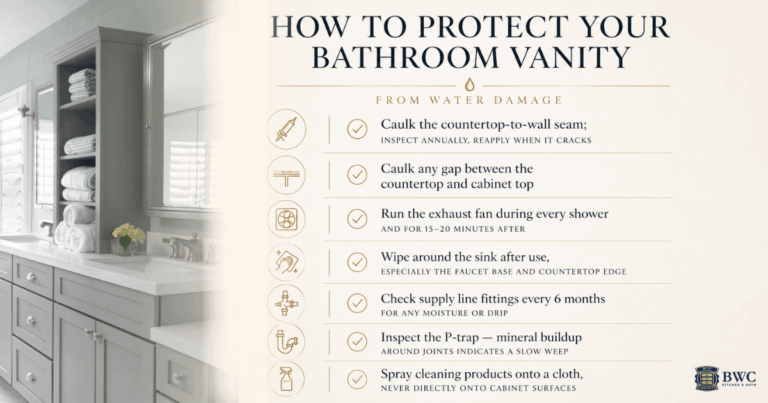
The 4 Main Causes of Vanity Water Damage
- Splash zone exposure. The countertop-to-wall seam takes constant water contact. If the caulk cracks and isn't replaced, water works behind the cabinet top and into the box over time. This is the most common and most preventable cause.
- Under-sink leaks. A slow drip from the P-trap or a supply line fitting you never notice - until the cabinet floor swells and the finish blisters. Inspect under the sink every six months. Thirty seconds saves a cabinet.
- Poor ventilation. Bathrooms without adequate exhaust fans trap humidity against every surface. A fan rated for your bathroom's square footage, running during and for 20 minutes after every shower, meaningfully extends the life of every surface in the room including the vanity.
- Cleaning product damage. Bleach sprays, ammonia-based cleaners, and abrasive scrubbers strip protective finishes over time. Once the finish is compromised, the cabinet material absorbs what it was designed to repel.
If You Find Water Damage
Caught early (swollen finish, slight discoloration): sand back the area, dry thoroughly with a fan for 24–48 hours, refinish with matching paint or sealant.
Caught late (swollen box sides, soft spots, delaminating material): the affected cabinet piece typically needs replacement.
How to Care for Your Bathroom Vanity Long-Term
A plywood vanity with a good finish needs very little maintenance. But what it needs, done consistently, is the difference between a cabinet that looks great at year 15 and one that looks worn at year 5.
Daily and Weekly Cleaning
Painted finishes (shaker, flat-panel): soft damp cloth, followed by a dry cloth. Avoid paper towels, they're mildly abrasive on painted surfaces over repeated use.
Wood tone and stained finishes (oak, espresso, chestnut): damp cloth, dry immediately. Wood finishes are more sensitive to standing water than painted surfaces.
High gloss finishes: microfiber cloth only. Any abrasive creates micro-scratches that permanently dull the reflective surface. Apply glass cleaner to the cloth, not the surface.
What to avoid on all finishes:
- Bleach or bleach-based sprays
- Ammonia-based cleaners
- Abrasive scrubbing pads
- Spraying product directly onto the cabinet
- Leaving wet items resting against cabinet sides
Hardware Care
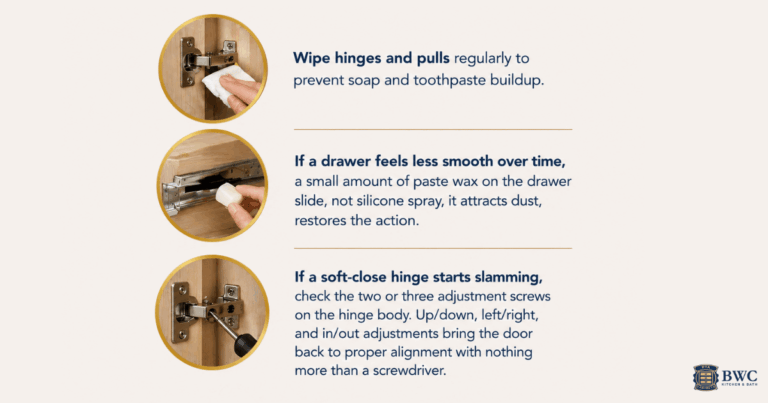
Wipe hinges and pulls regularly to prevent soap and toothpaste buildup. If a drawer feels less smooth over time, a small amount of paste wax on the drawer slide, not silicone spray, it attracts dust, restores the action. If a soft-close hinge starts slamming, check the two or three adjustment screws on the hinge body. Up/down, left/right, and in/out adjustments bring the door back to proper alignment with nothing more than a screwdriver.
Annual Maintenance Checklist
- Inspect all caulk lines at backsplash and counter seams
- Check under the sink for any moisture or drips
- Tighten loose hardware screws (pulls and handles loosen with daily use)
- Check hinge adjustments - doors should close evenly with no rubbing
- Wipe down cabinet interiors - catch dried product spills before they damage the finish
Where to Get the Best Value on a Bathroom Vanity
The most effective way to get quality without overpaying is at Buy Wholesale Cabinets. Big box stores carry mostly particleboard construction at full retail markup.
BuyWholesaleCabinets.com ships RTA bathroom vanity cabinets direct to your door across the USA. Every cabinet is built with plywood boxes, soft-close doors and drawers, and solid-construction drawer boxes at 40% below retail pricing.
Whether you're a contractor building multiple bathrooms or a homeowner doing a single remodel, wholesale pricing makes a real difference in the project budget without cutting corners on construction.
FAQ
What is the standard height of a bathroom vanity?
Standard bathroom vanity cabinet boxes are 34½ inches tall. With a typical countertop thickness of 1½ to 2 inches, the finished height lands at 36 inches – the modern comfort height. Traditional vanities finish at 32 inches; comfort height (36 inches) is what most adults find easier on posture for daily use.
What is the standard depth of a bathroom vanity?
Standard bathroom vanity depth is 21 inches from front to back – intentionally shallower than a kitchen base cabinet (24 inches) to maintain adequate clearance between the vanity, toilet, and bathroom door in typical bathroom layouts.
How do I know what size bathroom vanity to buy?
Measure the available wall space and subtract 2–3 inches per side for clearance. Combine units to build your total run. When clearance allows it, choose the larger size – extra storage is never regretted.
What is a bathroom vanity with a sink?
A bathroom vanity with sink refers to a complete setup where the countertop and sink are purchased to match the vanity cabinet base. The sink style (undermount, drop-in, vessel, or integrated) is chosen to work with the countertop material. BWC’s vanity sink bases are designed to accommodate all standard sink and countertop configurations.
How much does it cost to replace a bathroom vanity?
A complete bathroom vanity replacement – cabinet, countertop, faucet, and mirror – typically runs $600–$1,500 for a standard guest bathroom and $2,000–$4,000+ for a master bathroom double-sink run. Buying wholesale RTA reduces the cabinet cost by 40% versus retail.
What is the best material for a bathroom vanity cabinet?
Plywood. It holds screws through repeated use, resists moisture better than MDF or particleboard, and doesn’t swell or delaminate in humid bathroom conditions. Look for plywood box construction with soft-close hardware and dovetail drawer boxes as the quality baseline for any vanity you’re seriously considering.
Can I install a bathroom vanity myself?
Yes, freestanding vanity replacement is a straightforward DIY project with basic plumbing knowledge. Budget 3–5 hours. Floating vanity installations are more involved and typically benefit from professional help, especially for wall mounting and plumbing.
What should I use to clean a bathroom vanity?
Soft damp cloth followed by a dry cloth for painted, stained, and wood-tone finishes. Microfiber cloth only for high gloss finishes – any abrasive creates micro-scratches. Avoid bleach, ammonia-based cleaners, and abrasive pads on all finishes. Always spray your cleaning product onto the cloth, not directly onto the cabinet surface.
What's the difference between a vanity sink base and a vanity drawer base?
A sink base has an open interior – no center shelf – to accommodate the P-trap and supply line plumbing. A drawer base is all drawers, providing organized storage beside the sink. For a basic single-sink setup, you order one sink base. For more counter space or storage, add one or more drawer bases beside it to build your total vanity run.