

 Sales:
  Customer Service:
Pinterest Coffee Bar Ideas That Actually Work

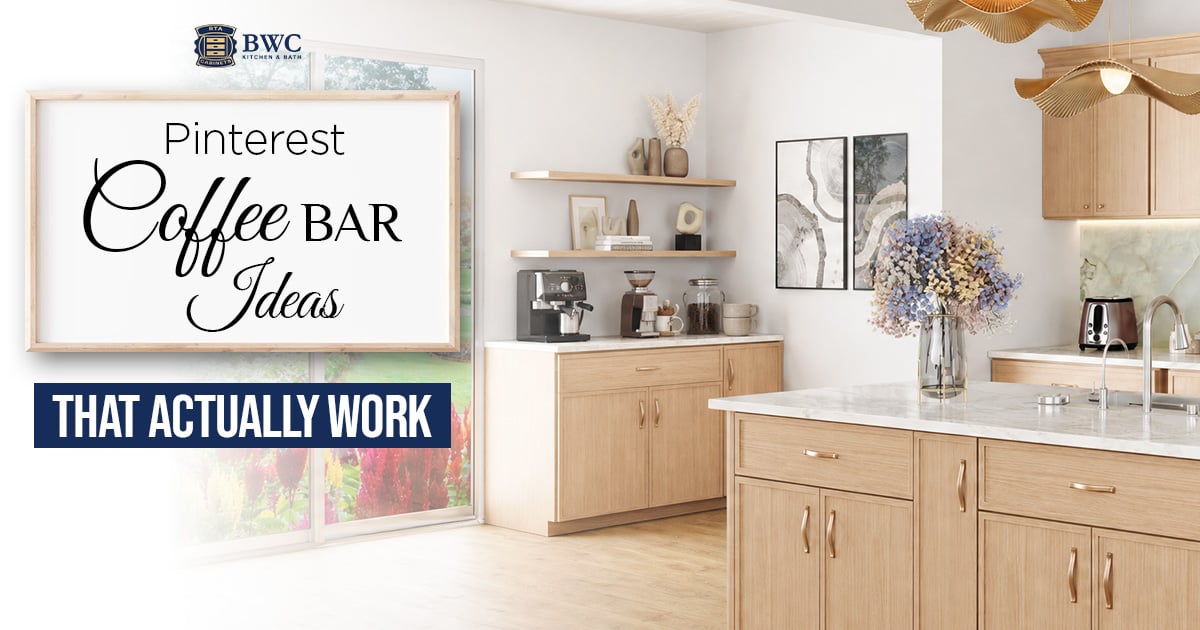
Most coffee bar ideas you see online share the same problem: they look great in photos and fall apart in daily use. A tiered tray with mugs, a chalkboard sign, and an espresso machine crammed into a corner does not make a functional coffee station. It makes a mess you will resent by week two.
A home coffee bar that actually works needs three things: enough counter space for your machine and grinder, storage for mugs, beans, and filters within arm’s reach, and a surface that can handle water rings and coffee splashes without staining.
Here is what actually matters when you are building one.
Ready to Begin Your Project?
Built-In vs. Freestanding: Pick the Right Setup for Your Kitchen
This is the first decision, and it shapes everything else.
A built-in coffee bar uses dedicated cabinetry, usually a section of standard 24-inch deep base cabinets and matching wall cabinets installed as part of your kitchen layout. It looks seamless, keeps everything behind cabinet doors when you want a clean look, and adds resale value. The trade-off is cost and commitment. You are building it into your kitchen, so moving it later means patching walls and reworking cabinetry.
A freestanding coffee bar uses a console table, bar cart, or repurposed dresser. It works in rentals, small kitchens, or anywhere you do not want to commit to a permanent setup. The trade-off is stability and storage. A bar cart holds an espresso machine and a few mugs. That is about it.
The honest take: If you are already remodeling your kitchen, build it in. The cost difference between adding a 36-inch coffee station during a remodel versus retrofitting one later is significant. If your kitchen is staying as-is, a freestanding setup with a solid 24-inch deep surface on top works fine.
Which Cabinets Work Best for a Kitchen Coffee Bar
Not all cabinet types make sense for a coffee station. Here is what does.
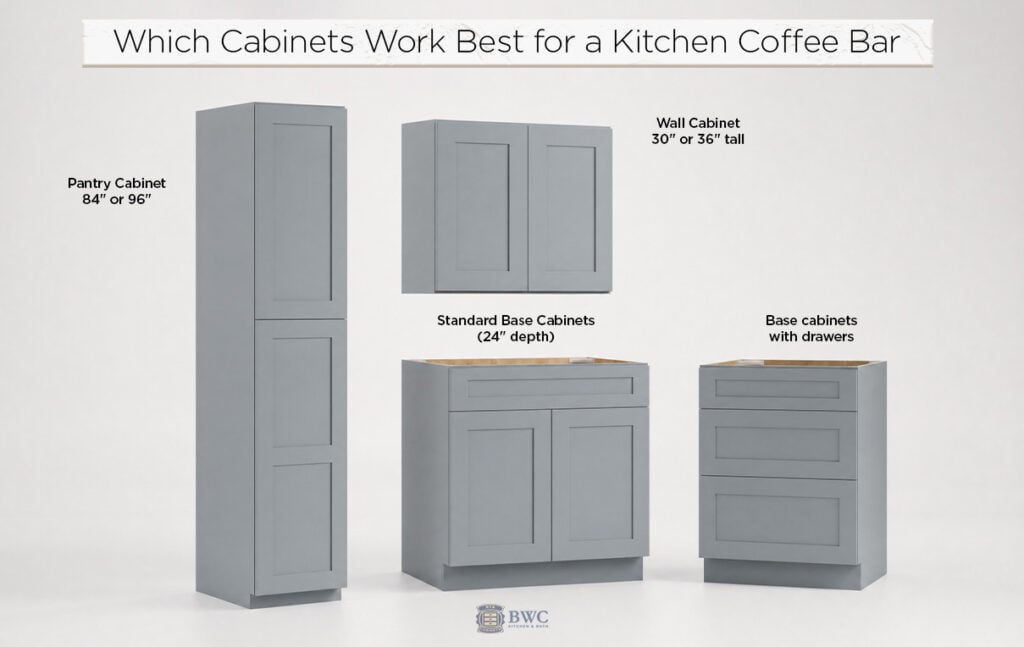
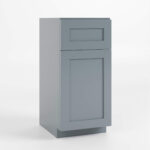
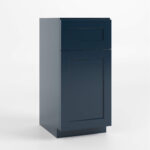
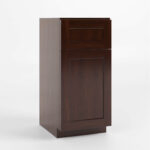
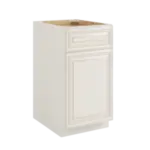
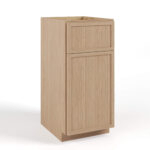
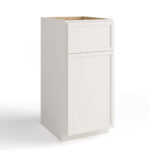
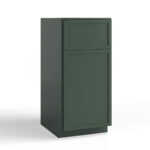
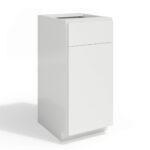
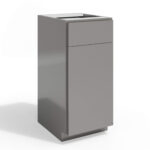
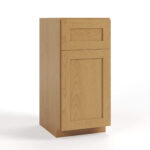
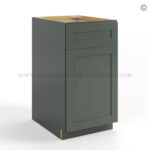
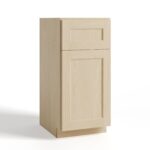
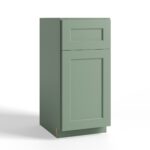
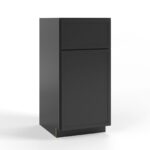
- Standard Base Cabinets (24″ depth): This is the non-negotiable foundation of a functional coffee bar. Standard 24-inch deep kitchen base cabinets provide the structural footprint and countertop depth needed to accommodate commercial-grade espresso machines, heavy grinders, and knock-boxes safely, leaving enough clear space in front to prep your drinks.
- Wall cabinets (30″ or 36″ tall): Mount them 18 inches above your countertop and you have covered storage for mugs, syrups, and supplies without cluttering the counter. Open-frame or glass-door wall cabinets add visual interest if you want to display your mug collection.
- A tall pantry cabinet (84″ or 96″): Placing this next to your coffee station solves the bulk storage problem. Bags of beans, extra filters, backup syrups, and that pour-over kit you use on weekends all fit behind one door. This is the piece most people forget, and it makes the biggest difference in keeping your coffee bar from looking cluttered.
- Base cabinets with drawers: Drawers beat base cabinets with shelves for coffee stations every single time. You will reach for filters, spoons, and accessories constantly. Pulling open a drawer is faster and more ergonomic than crouching to dig through a bottom shelf.
If you are sourcing cabinets, shaker-style RTA cabinets work exceptionally well for coffee bars because the clean lines fit almost any interior style, from modern farmhouse to contemporary transitional.
Coffee Bar Styles Worth Stealing
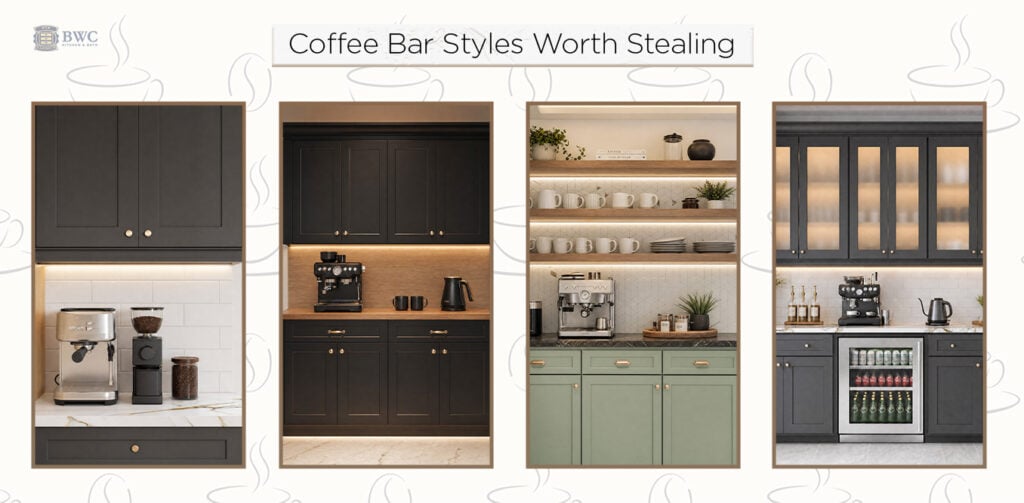
- The Minimal Counter Station
One section of full-depth countertop, 24 to 36 inches wide. Your machine, a grinder, and a small canister for beans. A wall cabinet above handles the mugs. Nothing else on the counter. This works best in small kitchens where every inch of counter space matters.
- The Butler’s Pantry Coffee Bar
If you have a butler’s pantry or a hallway niche between the kitchen and dining room, this is one of the best spots for a built-in coffee bar. It keeps the mess and the morning traffic out of the main kitchen. Add an outlet, a standard 24-inch deep countertop, and upper cabinets.
- The Open Shelf Display
Two or three floating shelves, a 24-inch deep countertop on a base cabinet, and your best mugs on display. This leans into the coffee bar decor side of things. It works if you are genuinely going to keep it curated. If you are the type to shove random items on any open surface (most of us are), skip this one.
4.The Full Beverage Center
Coffee machine, electric kettle, and a small beverage fridge built into a base cabinet. This is the most involved setup and works best in larger kitchens or open-concept spaces. A 24-inch beverage fridge fits perfectly into a standard base cabinet opening. Pair it with ready-to-assemble kitchen cabinets for glasses and mugs, and you have a station that handles coffee, tea, and cold drinks.
The Countertop Surface Matters More Than You Think
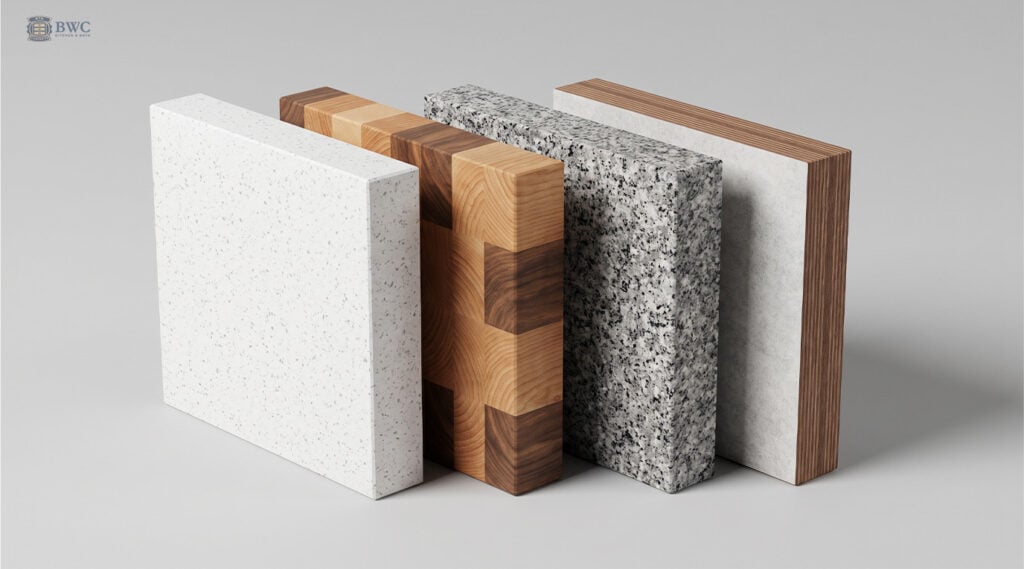
Coffee is acidic. It stains. It splashes. Your coffee bar countertop needs to handle that without requiring constant maintenance.
| Countertop Material | Resistance to Coffee Stains | Practical Maintenance |
|---|---|---|
| Quartz | High (Non-porous surface) | Zero sealing required; easily wipes clean without leaving water rings. |
| Butcher Block | Low (Porous wood fiber) | Requires food-safe sealants and will develop a distressed character over time. |
| Granite | Medium (Requires care) | Needs chemical resealing once a year; light patterns show stains quickly. |
| Laminate | Medium (Budget-friendly) | Handles spills fine, but seams can swell if water pools around the machine. |
Design Warning: Tile is a hard no for a coffee bar. Grout lines collect coffee drips instantly, and uneven tile surfaces will make your espresso grinder wobble during operation.
Storage Solutions That Keep Coffee Bar Functional
The difference between a coffee bar that works and one that becomes a junk collector comes down to storage engineering: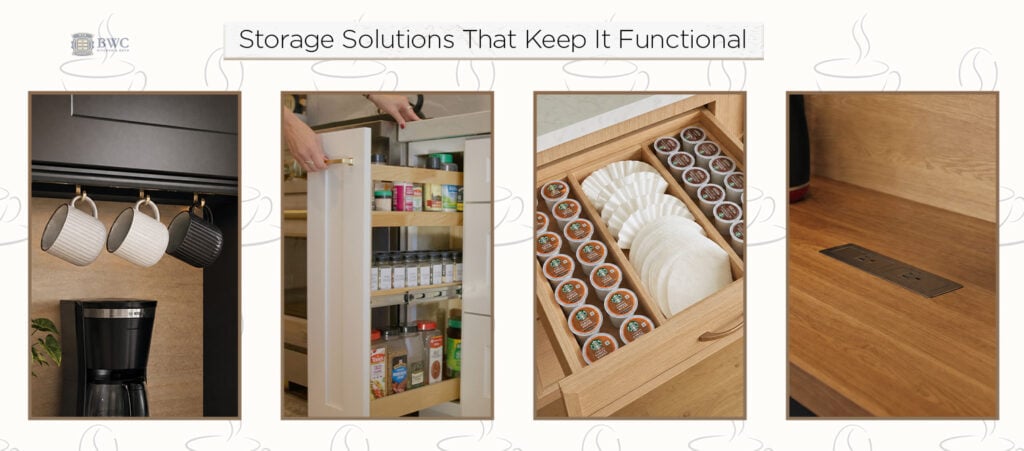
- Mug hooks under wall cabinets free up precious shelf space and keep your daily mugs within reach.
- A narrow pull-out spice rack (3 to 6 inches wide) repurposed for syrups and flavorings fits perfectly between the machine and the wall.
- Drawer inserts for K-cups, pods, or filters keep supplies organized without stacking ugly cardboard boxes on the counter.
- A built-in outlet strip inside a cabinet or just above the backsplash keeps cords off the counter. Plan for at least two outlets. Your machine and grinder need separate plugs.
One physical detail people overlook is clearance height. Measure your espresso machine with the lid completely open or the water reservoir removed. If your machine needs 18 inches of clearance and your upper cabinets sit 15 inches above the counter, you will be pulling a heavy machine out every single time you refill the tank.
FAQ
How much space do I need for a home coffee bar?
At minimum, 24 inches of counter width and a full standard 24 inches of depth. That fits a standard drip machine or a compact espresso machine with a grinder beside it. For a full setup with a grinder, kettle, and accessories, plan for 36 to 48 inches of counter width on a standard kitchen base run.
Can I add a coffee bar without a full kitchen remodel?
Yes. A freestanding console table or a wall-mounted shelf with a dedicated outlet works without touching your existing cabinetry. If you want a more built-in look without a full remodel, adding a single 24-inch deep base cabinet and a matching wall cabinet is a straightforward weekend project.
What is the best height for a coffee bar counter?
Standard counter height, 36 inches, works for most people. If your coffee bar is a standing station only with no seating, 36 inches is comfortable for daily use. Bar height at 42 inches only makes sense if you are adding stools and treating it as a breakfast bar hybrid.
Do I need plumbing for a coffee bar?
No. Most home coffee bars use machines with removable water reservoirs, so no plumbing connection is needed. A plumbed-in setup is a luxury for high-end espresso machines, but it adds cost and limits where you can place the station.