

 Sales:
 Customer Service:

Cabinet Door Styles: 5 Types of Cabinet Doors Explained

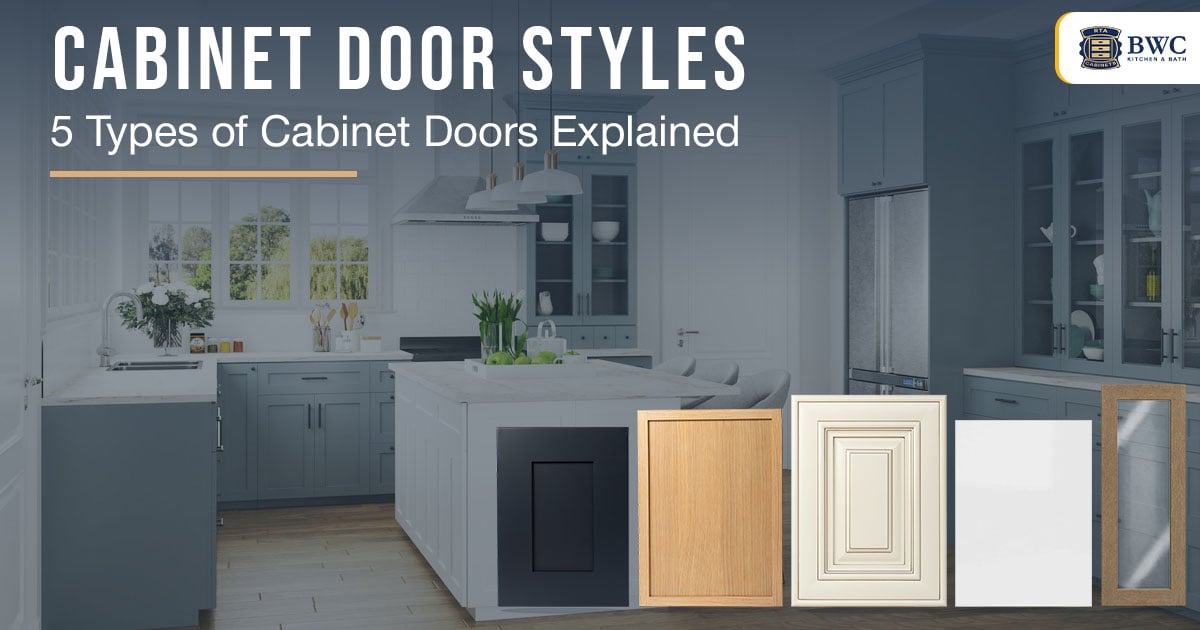
The five main cabinet door styles are shaker, slim shaker, raised panel, slab (flat panel) and glass-front. Shaker has a flat recessed center panel inside a square frame and suits almost any kitchen; slab is one flat surface for a modern look; raised panel has a shaped center panel for a traditional look. How the door sits on the cabinet box, full overlay, partial overlay or inset, changes the look as much as the door itself.
Cabinet doors cover most of what you see in a kitchen, so the door style sets the tone before color or hardware do. A shaker door reads transitional, a slab door reads modern, and a raised panel door reads traditional. This guide covers each style, how it is built, what it suits, how the doors sit on the cabinets, and which of our cabinet lines comes in each style.
Cabinet Door Styles at a Glance
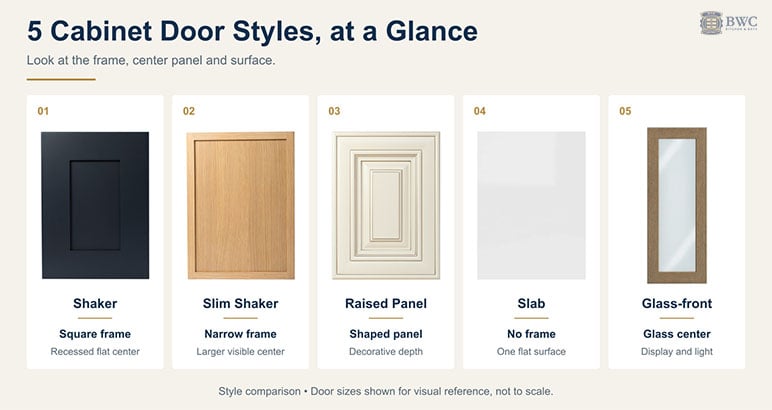
| Door style | How it is built | Look | Cleaning | Our lines in this style |
|---|---|---|---|---|
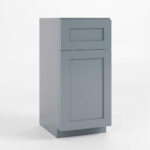
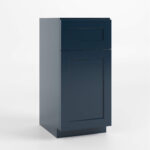
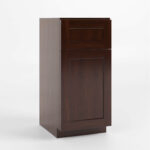
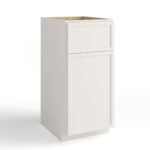
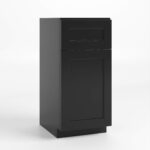
| Shaker | Five-piece door: four frame pieces around a flat recessed center panel | Transitional; works from farmhouse to modern | Easy; the inside corner of the frame collects some dust | White, Gray, Espresso, Navy Blue, Black and our other framed shaker lines; Modern White Shaker, Pearl White, Ivory White, Oxford Blue and Graphite Gray in frameless |
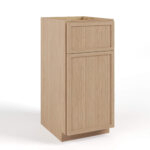
| Slim shaker | The same five-piece build with narrower frame pieces | Modern transitional; lighter than standard shaker | Easy | Dove White Slim Shaker, Slim Oak Shaker, Slim Shaker Green, Slim Black Shaker |
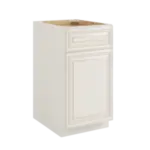
| Raised panel | A frame around a center panel with shaped edges that rise toward the middle | Traditional and formal | More detail to wipe | Charleston White Raised Panel; White Deco and Classic Chestnut in frameless |
| Slab (flat panel) | One flat surface with no frame | Modern and minimal | Easiest; nothing to catch dust | Frameless Gloss White and Gloss Gray |
| Glass-front | A frame with glass in place of the center panel | Display and light; an accent style | Wipe with glass cleaner | Glass-door wall cabinets in Rustic Wood; mullion doors (glass sold separately) in Modern White Shaker, Pearl White and White Deco |
Shaker Cabinet Doors
The shaker door is a five-piece construction: two vertical stiles and two horizontal rails form a square frame around a flat center panel set slightly back from the frame. It is also called a recessed panel door. The edges are clean and square, with no decorative routing.
Why it works: shaker sits between traditional and modern, so the rest of the kitchen decides which way it leans. Pair it with cup pulls and crown molding for a classic look, or with long bar pulls and no crown for a contemporary one.
Best for: almost any kitchen, from farmhouse to contemporary, and buyers who want a door that will not look dated in a few years. Most of our framed lines and five of our frameless lines use a shaker door. Browse shaker cabinets, or see the recessed panel door entry in our glossary.
Slim Shaker Cabinet Doors
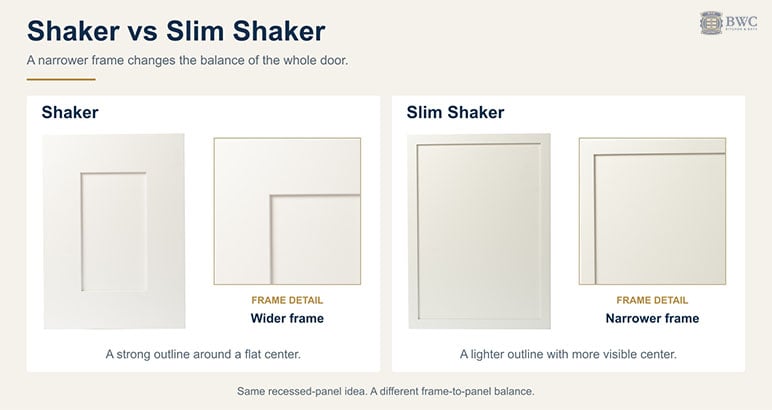
Slim shaker uses the same five-piece construction as a standard shaker door, but with narrower rails and stiles. The thinner frame leaves a larger center panel, which gives the door a sleeker proportion.
Why it works: it keeps the familiar shaker outline while looking lighter and more refined, so it suits kitchens that should feel modern without going fully flat.
Best for: modern transitional kitchens, open-plan spaces and smaller kitchens where a heavy frame would feel busy. Our slim shaker lines include Dove White Slim Shaker and Slim Oak Shaker; see all slim shaker cabinets.
Raised Panel Cabinet Doors
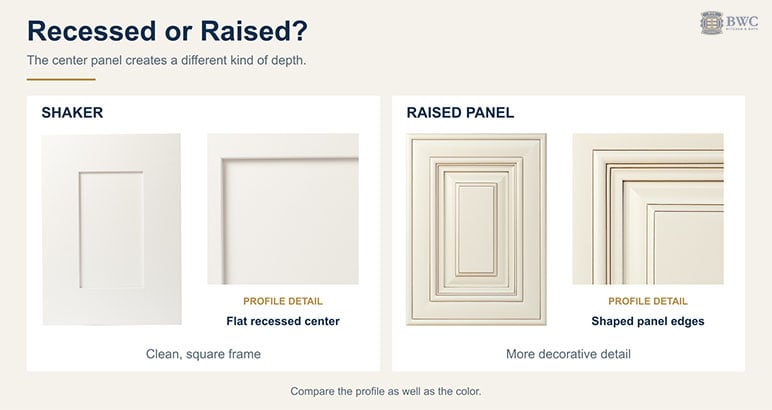
A raised panel door has a center panel with beveled or shaped edges that rise toward the middle, so the panel sits proud of the flat area around it. The profile creates shadow lines and depth that read as formal and traditional.
Why it works: in a traditional kitchen, a raised panel door adds richness, especially with crown molding, corbels and classic hardware such as antique brass knobs. The shaped edges catch light differently through the day.
Best for: traditional and formal kitchens and homes with colonial or classic architecture. See Charleston White Raised Panel or browse all raised panel cabinets.
Slab (Flat Panel) Cabinet Doors
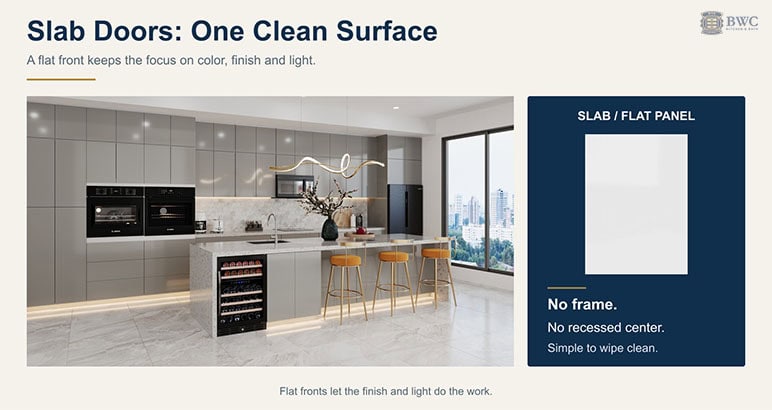
A slab door, also called a flat panel door, is one continuous flat surface with no frame, no recessed panel and no profile. It is the cleanest, most minimal door style, and it lets the color and finish do all the work.
Why it works: with no frame lines, a run of slab doors looks like one calm surface. High-gloss slab doors reflect light and help a small kitchen feel larger, and slab doors pair naturally with frameless cabinets and long bar pulls or no visible hardware at all.
Best for: modern, European-style and minimalist kitchens, condos and lofts, and anyone who wants the easiest doors to wipe clean. Our Frameless Gloss White and Gloss Gray lines use this style; browse high gloss cabinets.
Shaker vs slab: shaker adds a frame that softens the look and gives the door some depth; slab is flatter and more modern. If you are between the two, slim shaker is the middle ground.
Glass-Front and Mullion Cabinet Doors
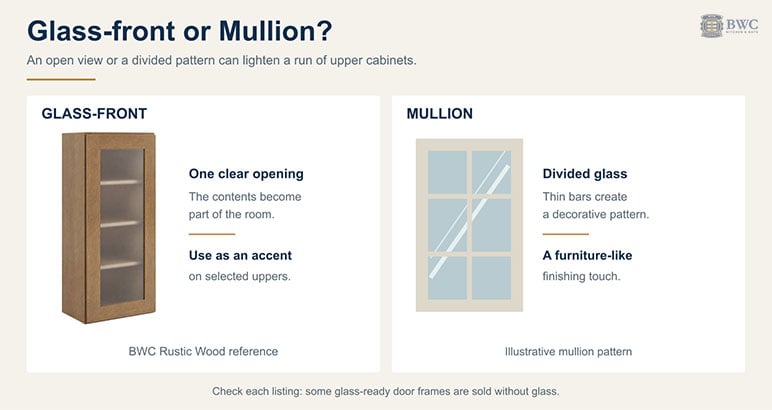
Glass-front doors use a frame with glass in place of the center panel. A mullion door adds thin dividers across the glass, which gives a more traditional, cottage or furniture-like look. They are used on wall cabinets to display dishes and glassware and to break up a long run of solid doors.
Why they work: a few glass doors add depth and make a kitchen feel more open. They work well flanking a range hood, above a coffee bar or in a butler's pantry.
Best for: accent cabinets in any style, at eye level where the contents are visible. Keep them to a few cabinets unless you want to keep every shelf tidy. Our Rustic Wood line offers glass-door wall cabinets, and several frameless lines offer mullion-door wall cabinets with the glass sold separately, such as the Pearl White mullion door wall cabinet. See mullion in our glossary.
Full Overlay, Partial Overlay and Inset Doors
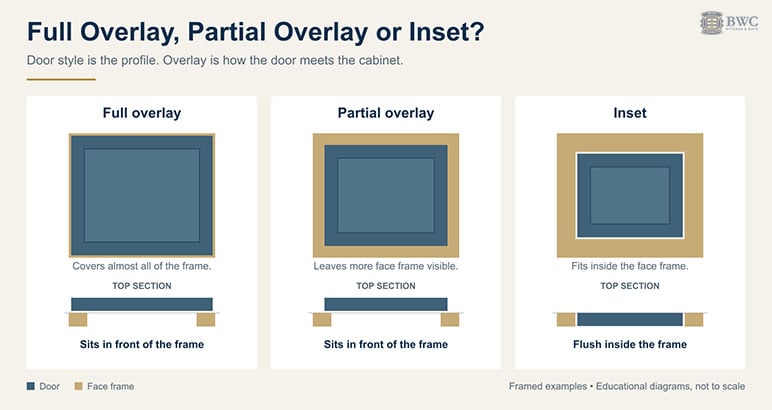
Door style is the profile of the door. Overlay is how the door sits on the cabinet box, and it changes the look just as much.
| Full overlay | Partial overlay | Inset | |
|---|---|---|---|
| How the door sits | Covers almost the entire front of the cabinet box | Covers part of the face frame, leaving a strip showing around each door | Sits inside the face frame, flush with it |
| Look | Clean and continuous, with narrow gaps between doors | Traditional, with more frame visible | Traditional; the door sits inside the frame |
| Storage access | Wide openings | Narrower openings | Narrowest openings, since the frame takes some space |
Our cabinets use full overlay doors: our framed lines combine full overlay doors with a face frame, and our frameless lines are full overlay by design, with no face frame at all. Read more about full overlay and inset cabinet doors in our glossary, or compare framed cabinets and frameless cabinets.
How to Choose a Cabinet Door Style
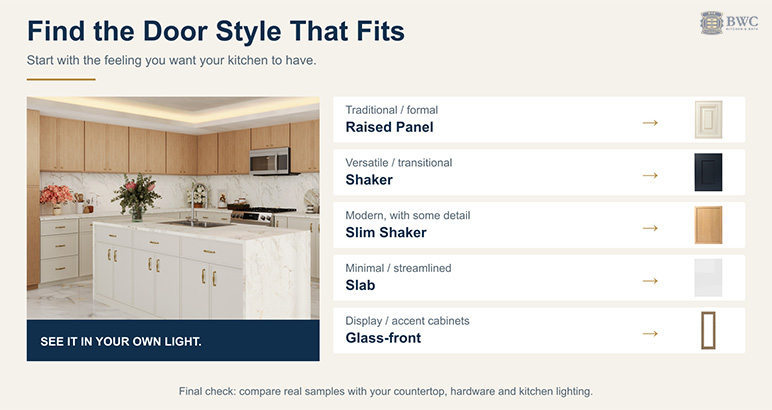
Choosing a door style comes down to four things: how your home already looks, how much cleaning you want to do, how long you plan to keep the kitchen, and how the door looks and feels in person.
| Your kitchen | Door style to start with | Why |
|---|---|---|
| Traditional, formal | Raised panel | Shaped panels and shadow lines suit classic architecture |
| Transitional or not sure | Shaker | Works with almost any hardware, color and countertop |
| Modern but not stark | Slim shaker | Shaker outline with a lighter frame |
| Modern, minimal, European | Slab | Flat, continuous fronts with nothing to break the line |
| Display or open feel | Glass-front or mullion, as accents | Breaks up solid doors and shows off dishes |
Match the architecture. A craftsman bungalow suits shaker, a mid-century modern home suits slab, and a colonial suits raised panel. You do not have to match exactly, but the kitchen should not feel as if it belongs to a different house.
Think about cleaning. Slab doors are the easiest to wipe, shaker is close behind, and raised panel has the most edges. If you cook often, simpler profiles save time.
Think about how long you will keep it. Shaker has been a mainstream choice for decades, so it is the lower-risk choice if you may sell the house.
See the door in person. A door looks and feels different in your hand than on a screen. Order a sample door to check the frame width, the center panel and the finish before you order a full kitchen. Sample doors are the exception to our $2,000 minimum, ship free and typically arrive within 2–4 days, depending on your location.
Frequently Asked Questions
What are the different types of cabinet doors?
The main cabinet door styles are shaker, slim shaker, raised panel, slab (flat panel) and glass-front, including mullion doors. Doors are also described by overlay: full overlay doors cover almost the entire cabinet front, partial overlay doors leave part of the frame showing, and inset doors sit flush inside the frame.
What is the most popular cabinet door style?
Shaker. Most of our framed lines and five of our frameless lines use a shaker door, and its flat recessed panel and square frame suit farmhouse, transitional and modern kitchens alike.
What cabinet door style is in style?
Shaker and slim shaker remain the safest choices for a kitchen that will not date quickly. Slab doors are the go-to for modern and minimalist kitchens, and glass-front or mullion doors are popular as accents on a few wall cabinets.
What is the difference between shaker and slab cabinet doors?
A shaker door has a square frame around a flat recessed center panel; a slab door is one flat surface with no frame. Shaker reads transitional and gives the door some depth, while slab reads modern and is the easiest to wipe clean.
What is the difference between shaker and raised panel cabinet doors?
Shaker doors have a flat center panel inside a square-edged frame. Raised panel doors have a center panel with beveled or shaped edges that rise toward the middle. Shaker reads transitional and versatile; raised panel reads traditional and formal.
What is the difference between inset and overlay cabinet doors?
Overlay doors sit on the front of the cabinet box: full overlay covers almost all of it, and partial overlay leaves part of the face frame showing. Inset doors sit inside the face frame, flush with it, which costs more and slightly narrows the openings. Our cabinets use full overlay doors.
What is a flat panel cabinet door?
A flat panel cabinet door is another name for a slab door: one flat surface with no frame or raised profile. The term is sometimes also used for shaker doors because their center panel is flat, so check whether a line means slab or shaker.
Are slab cabinet doors more expensive than shaker doors?
Not necessarily. Price depends more on the cabinet line and its construction than on the door profile. Our frameless lines, which come in shaker, raised panel and slab styles, use 3/4-inch plywood boxes; our framed lines use 1/2-inch plywood boxes at a lower price point. Compare the full specification, not just the door.
Can I mix cabinet door styles in one kitchen?
Yes, and it looks intentional when it follows a plan. A common approach is shaker on the perimeter and slab or glass-front doors on the island or on a few wall cabinets.