
 Sales:
  Customer Service:
Kitchen Cabinet Sizes & Dimensions 101: The Complete Guide

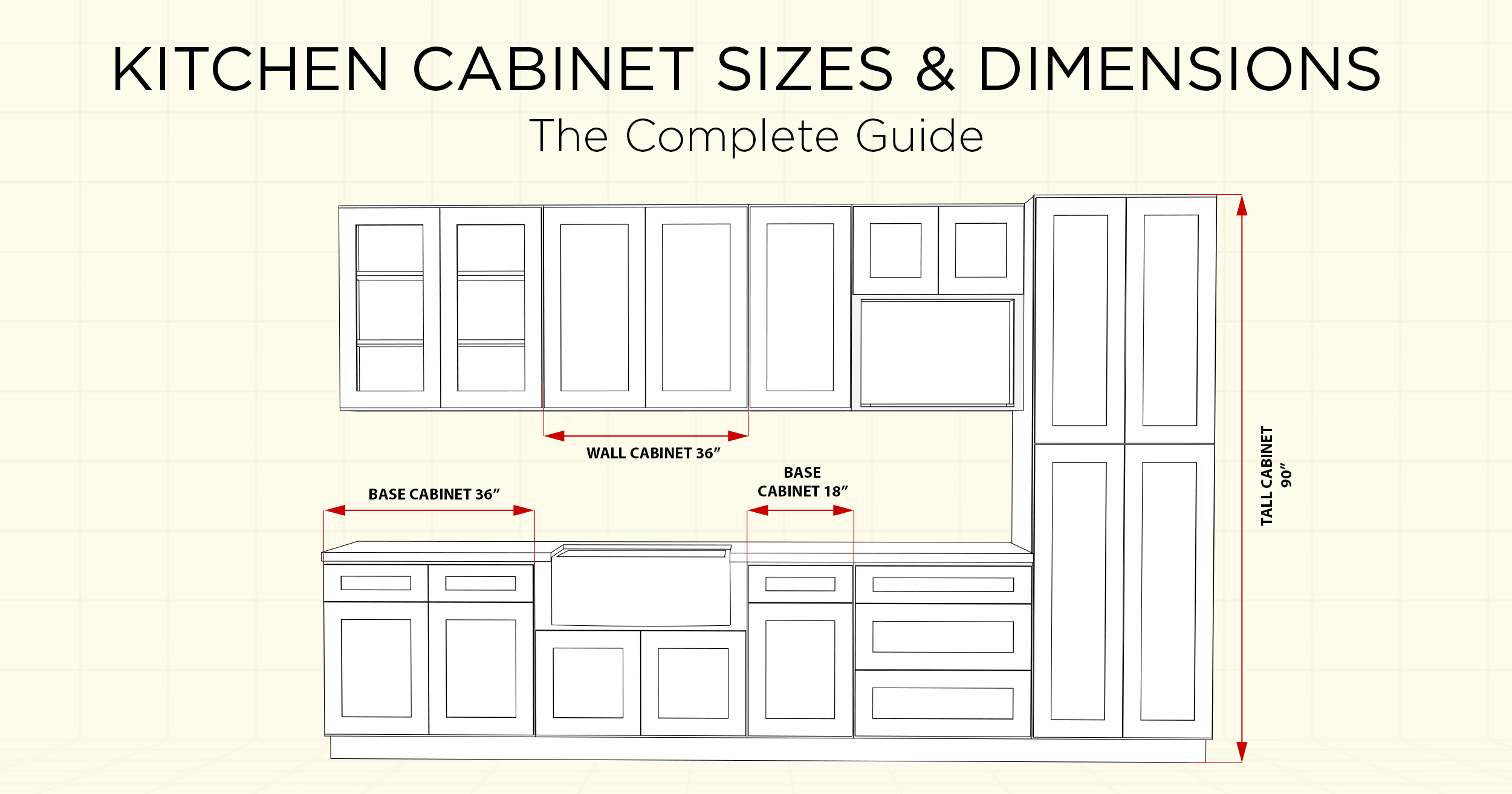
Table of Contents
In the complex world of home designs, there is a single source of truth: standardization. These metrics allow distinct trades (from stone fabricators to appliance engineers) to operate in unison.
Once you understand the basics of standard cabinet sizing, you’ll be able to plan your layout with confidence and ensure every piece fits perfectly.
Below is a detailed guide to standard cabinet heights, depths, and widths.
Kitchen Cabinet Standards
Cabinet dimensions are the foundation of a functional kitchen. Before you begin your design, you must understand three universal standards to ensure your layout actually works:
- Universal Kitchen Base Height:
The standard height for all base kitchen cabinets is 34.5”, and because most countertops are 1.5" thick, the standard finished countertop height is 36". - Appliance Coordination:
Appliances have non-negotiable dimensions. For example, a standard dishwasher requires a 24" opening. Cabinets form the grid that appliances live in; if the cabinets are wrong, the appliances simply won't fit. - Standard Depth & Material Efficiency:
Standard base cabinets are 24" deep. This dimension is critical because it maximizes the yield from standard stone slabs and plywood sheets. Deviating from this standard creates waste and can increase fabrication costs by 30–40%.
Kitchen Cabinet Dimensions
A successful kitchen layout relies on three essential dimensions of joinery: Height, Depth, and Width of kitchen cabinets.
Base Cabinets Dimensions
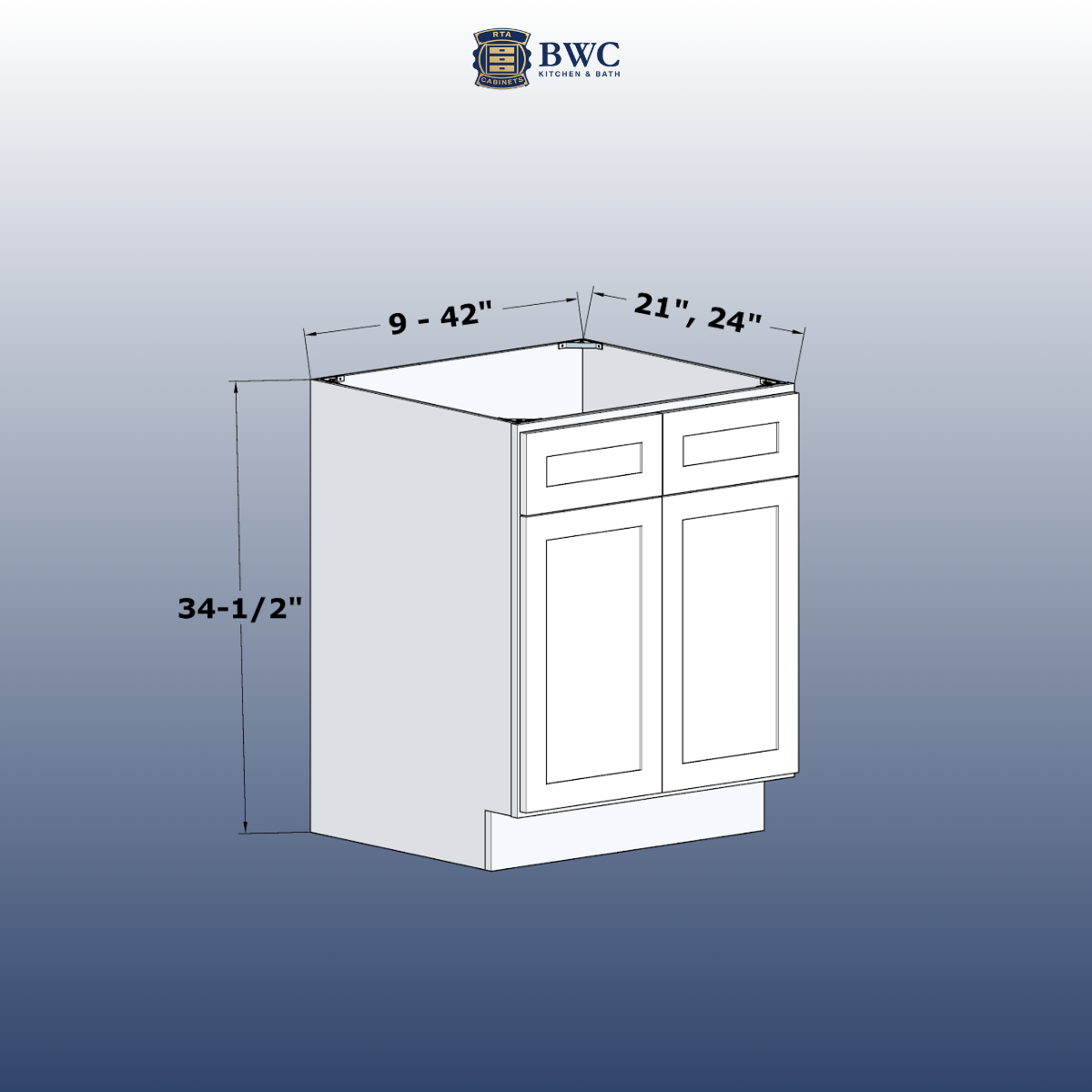
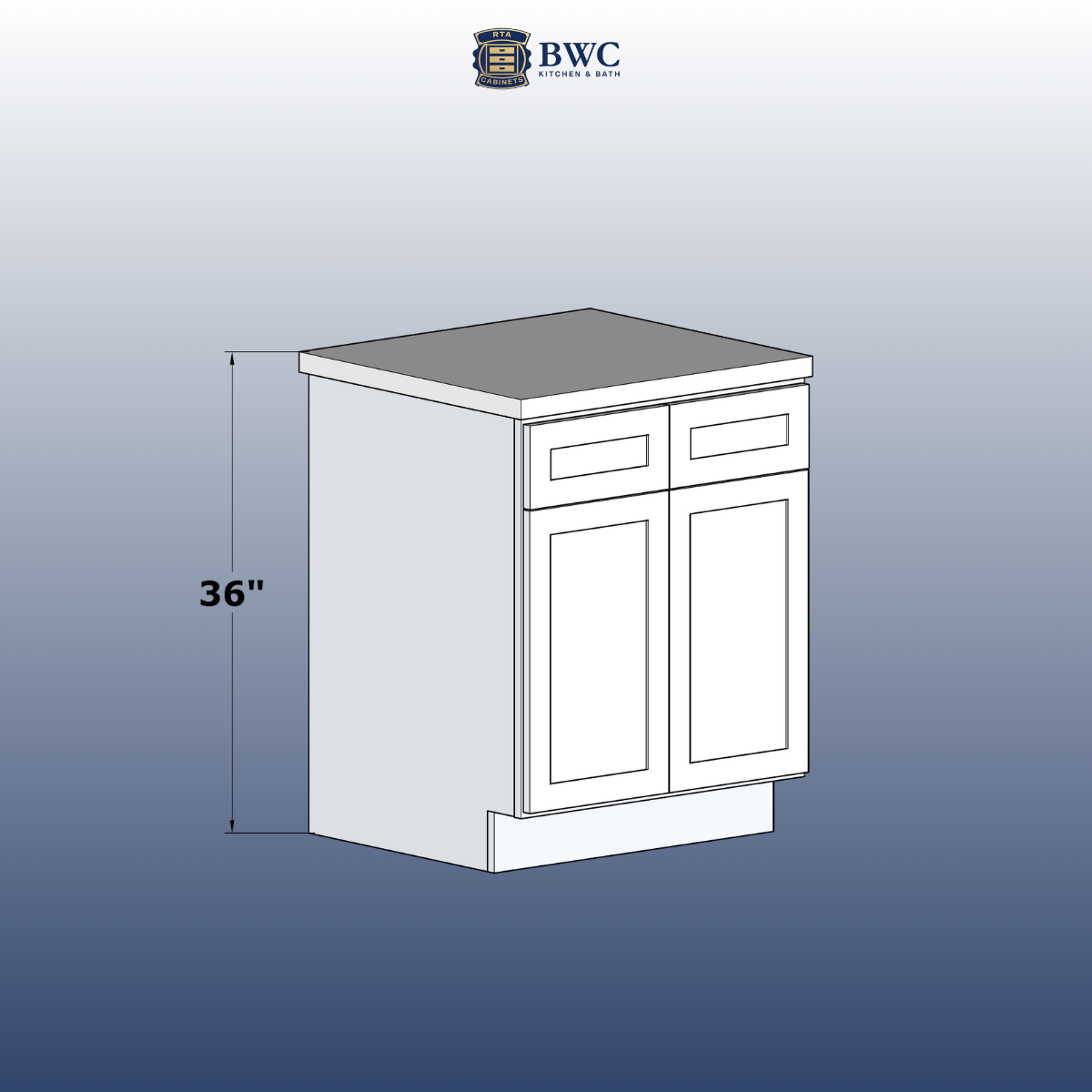
| BASE CABINETS DIMENSIONS | STANDARD MEASUREMENT | DETAILS AND APPLICATION |
|---|---|---|
| Height |
34.5 inches (Cabinet Only) 36 inches (w/ Countertop) |
36" is the ideal working height - It balances comfort for hip-height prep/cleaning and aligns perfectly with standard dishwashers and slide-in ranges. |
| Depth |
24 inches (Standard) 21 inches (Vanity Standard) |
24" is the industry standard. It provides ample space for plumbing and drawers. Note: 21" is standard for vanities and is also a solution for tight spaces. |
| Width |
9" to 42" (Available in 3" increments) |
These widths are selected to accommodate specific functions, such as sink bases, drawer stacks, or tray dividers, tailored to each kitchen's unique requirements. |
Wall Cabinets Dimensions
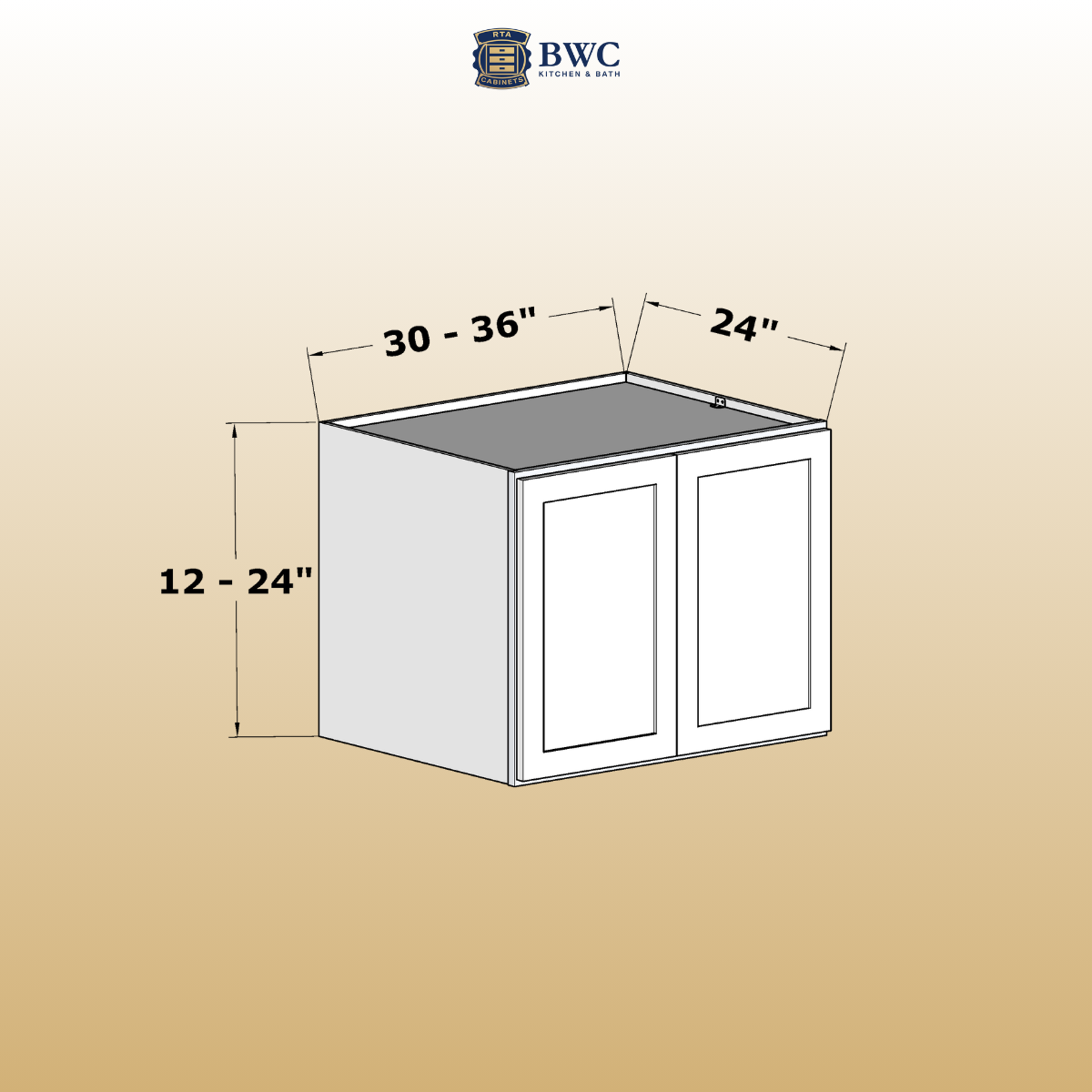
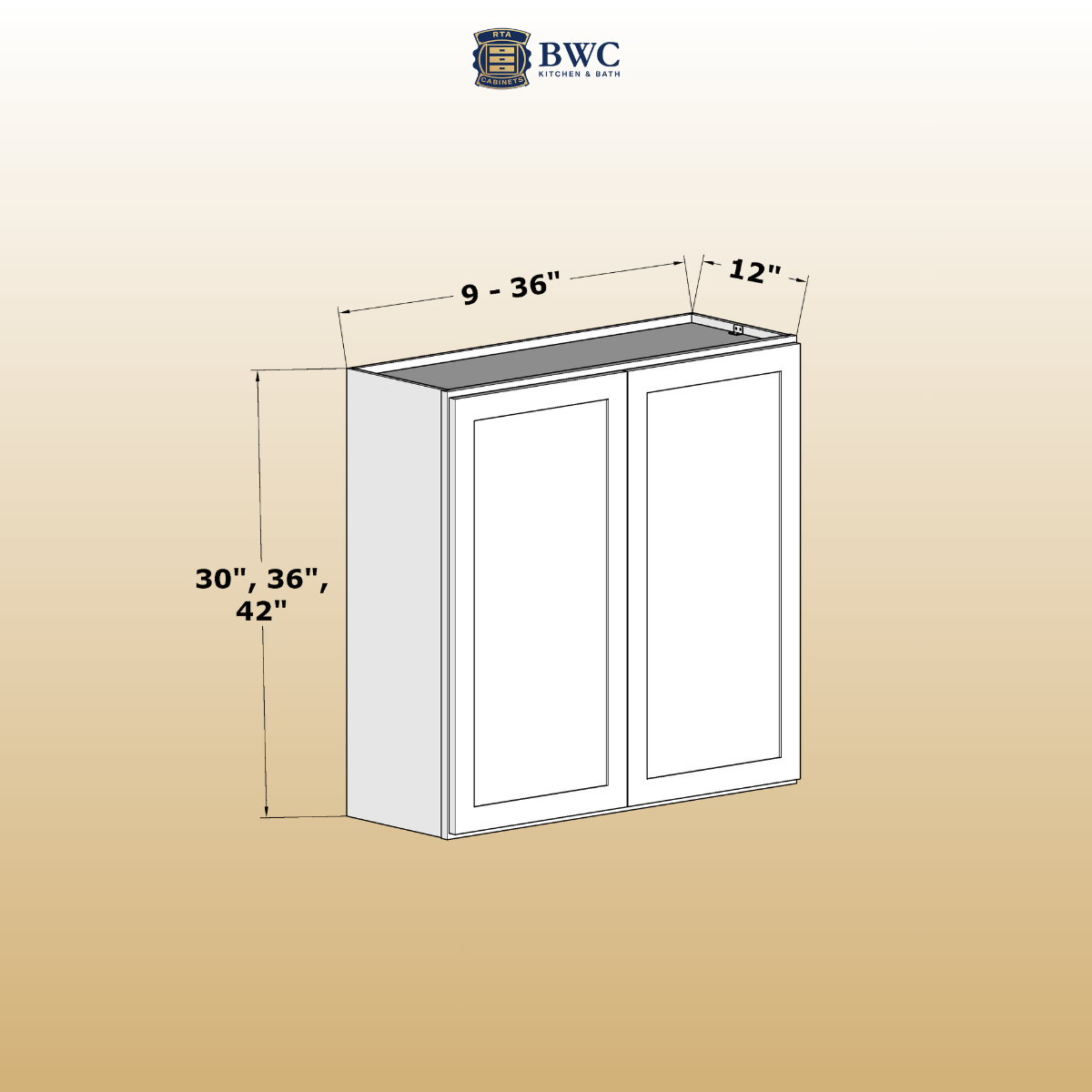
| WALL CABINETS DIMENSIONS | STANDARD MEASUREMENT | DETAILS AND APPLICATION |
|---|---|---|
| Height |
12" – 24" (Appliance/Bridge) |
12" / 15": Used for 7ft layouts; pairs with 30" tall wall cabinets. 18": It is common for 7.5ft layouts; pairs with 36" tall wall cabinets. 24": Used for 8ft layouts; pairs with 42" tall wall cabinets to sit flush against the ceiling. |
|
30", 36", 42" (General Storage) |
30": Used for 7ft ceilings or soffits below 12". 36": Used for 7.5ft alignment or 8ft ceilings with tall crown molding. 42": Best for 8ft ceilings to achieve a seamless, flush look. |
|
| Depth | 12" (Standard) | 12": The industry standard. Ensures easy access and allows small appliances to fit underneath. |
| 24" (Deep) | 24": Used above refrigerators and typically installed between side panels to fully enclose the appliance for a built-in look. | |
| Width |
9" to 36" (Available in 3" increments) |
These modular widths ensure a precise fit for any wall length, offering versatile solutions ranging from narrow spice pull-outs (9") to substantial double-door storage (36"). |
Pantry Cabinets Dimension
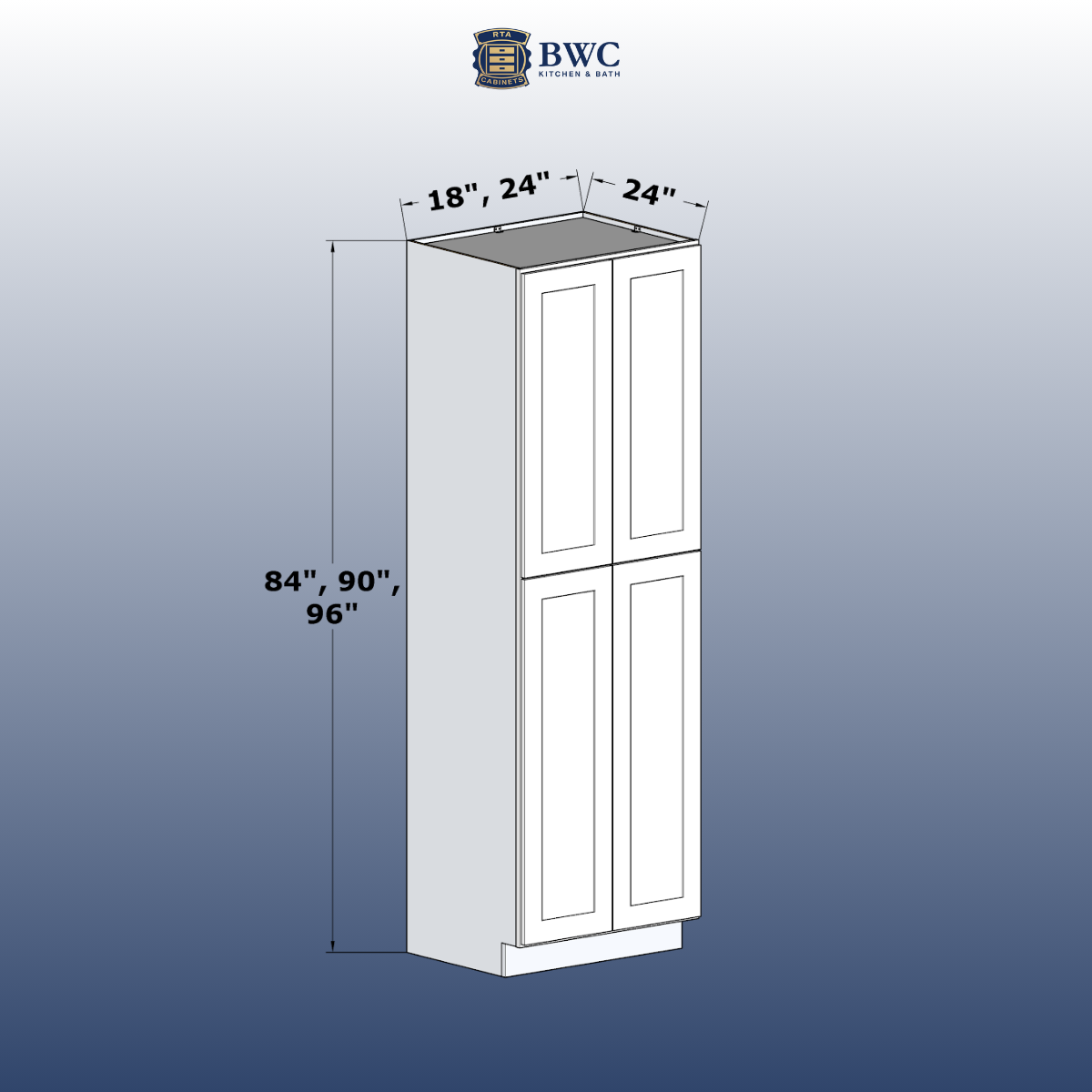
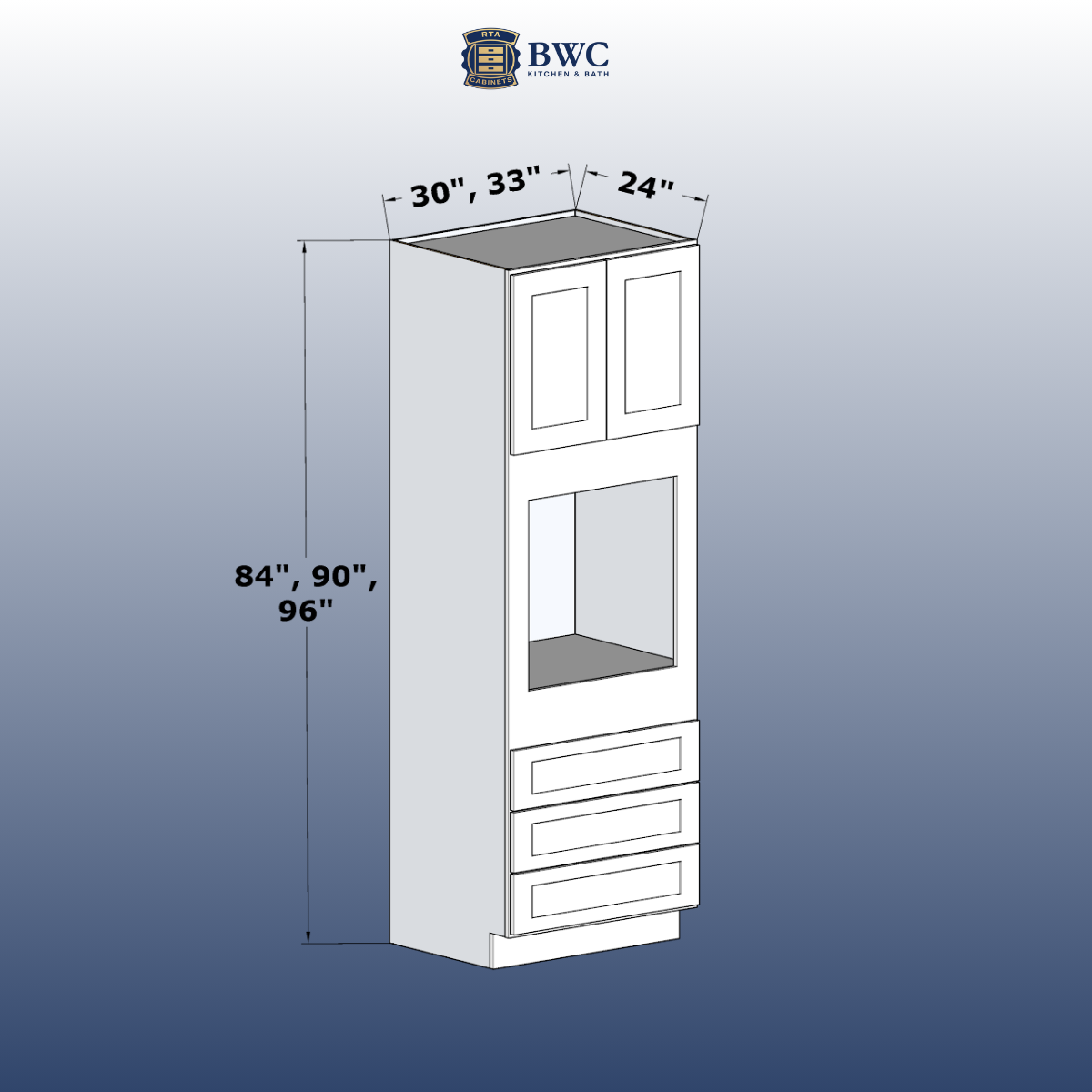
| PANTRY CABINETS DIMENSION | STANDARD MEASUREMENT | DETAILS AND APPLICATION |
|---|---|---|
| Height | 84 inches | Leaves space for trim or crown molding in homes with 8-foot ceilings. |
| 90 inches | A slightly taller option for a near-ceiling finish. | |
| 96 inches | Designed to reach an 8-foot ceiling for a built-in look. | |
| Depth | 24 inches (Standard) | The industry standard that aligns perfectly with base cabinets and appliances for an integrated look. |
| Width | 18 inches | Great for narrow, pull-out pantry shelves. |
| 24 inches | Standard double-door pantries with versatile shelving. | |
| 30/33 inches |
This is the minimum width of an oven pantry that also accommodates wider trays, bins, and storage baskets. 30” is the widest utility pantry. |
Pro Tip: Double Oven Fitment
Before purchasing a tall oven cabinet, cross-reference the cutout dimensions with the dimensions of your specific double oven or microwave/oven combo. These appliances often require more vertical space than the standard opening allows. It is common practice to remove the bottom two drawers of the cabinet to lower the platform and accommodate the extra height.
|
Zone / Application |
Standard Clearance |
Details and Compliance |
|---|---|---|
|
Standard Backsplash |
18 inches |
The industry standard. |
|
Accessible Design |
15 inches |
Lowered for specific user needs Note: This limits the use of tall countertop appliances. |
|
Range Hood Ventilation |
24" to 30" |
Required distance from the cooking surface. |
FAQ
What are the exact standard dimensions for base, wall, and tall cabinets?
Base Cabinets have 34.5″ Height (36″ w/ countertop), 24″ Depth, and widths from 9″ to 42″. Wall Cabinets are 30″, 36″, or 42″ Height, 12″ Standard Depth, and widths from 9″ to 36″. Tall Cabinets are 84″, 90″, or 96″ Height, 24″ Depth, and widths from 18″ to 36″.
How far should cabinets be from the ceiling?
The distance is determined by your ceiling height and the trim you choose. For a standard 8-foot ceiling, use 30-inch cabinets to fit beneath a soffit, 36-inch cabinets to allow clearance for crown molding, or 42-inch cabinets to extend to the ceiling.
What is a good depth for kitchen cabinets?
The standard depth for base cabinets is 24 inches. However, for kitchen islands or layouts with physical obstructions, cabinet depth is often reduced in 3-inch increments (down to 12 inches) to fit specific clearance requirements.
How deep should upper cabinets be?
The standard depth for wall cabinets is 12 inches, while cabinets above refrigerators are 24 inches. When staggering cabinet heights, taller cabinets must always be deeper than shorter ones. This depth difference is critical: it allows the crown molding from the lower cabinet to terminate cleanly at the side of the taller unit, preventing it from blocking the door swing.
How can I measure my own kitchen if I’m not a professional?
A functional layout relies entirely on accurate numbers. Use our step-by-step guide to ensure your measurements are precise before you begin.