
 Sales:
 Customer Service:
Framed vs Frameless Cabinets: The Differences Explained


Framed vs frameless cabinets comes down to one part: the face frame. Framed cabinets have a solid wood frame across the front of the box, and the doors and hinges mount to that frame. Frameless cabinets skip the frame, so the doors and hinges mount straight to the box sides and cover the whole front. Framed cabinets read traditional or transitional, frameless cabinets read modern, and both are strong builds when the box is plywood.
Most buyers meet this choice late, after they have picked a color and a door style. It is worth deciding earlier, because the build sets how the whole kitchen reads from across the room. This guide explains what each build is, how they differ in look, doors, hinges and construction, and which one fits your kitchen, with the framed and frameless lines we carry for each.
Framed vs Frameless Cabinets at a Glance
| Feature | Framed cabinets | Frameless cabinets |
|---|---|---|
| Also called | Face frame cabinets, American style | European style, full access |
| What is on the front | A solid wood face frame of stiles and rails | No frame; the box edges sit behind the doors |
| Where doors and hinges mount | On the face frame | On the inside of the box sides |
| The look | Classic, with a framed outline around each opening | Clean and modern, one continuous door line |
| Hinges on our lines | Soft-close, concealed | Soft-close, concealed |
| Box on our lines | Plywood, no particleboard | Plywood, no particleboard |
| Styles it suits | Traditional, farmhouse, transitional | Modern, contemporary, minimalist |
| Shop the build | Framed RTA cabinets | Frameless RTA cabinets |
What Are Framed Cabinets?
Framed cabinets, also called face frame cabinets, have a flat frame of solid wood attached to the front edges of the cabinet box. The frame is made of vertical pieces called stiles and horizontal pieces called rails. Doors and hinges mount to this frame, and the frame stiffens the front of the box and defines each opening.
The face frame is the traditional American cabinet standard. It gives the front of every cabinet a solid, finished edge, and it is what the classic door styles are built around. A shaker door on a face frame cabinet is the look most people picture when they think of a timeless kitchen.
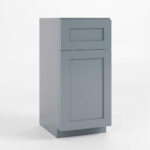
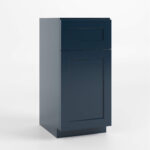
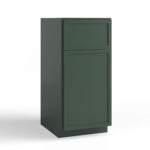
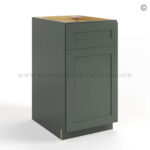
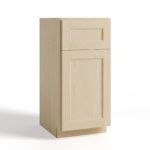
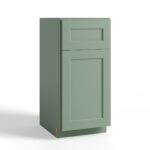
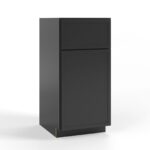
Our framed lines pair solid wood face frames with plywood boxes and soft-close, concealed hinges. Popular framed lines include White Shaker, Shaker Gray, Navy Blue Shaker and Green Shaker. You can see every framed line on our framed RTA cabinets page.
What Are Frameless Cabinets?
Frameless cabinets, also called European or full access cabinets, have no face frame. The doors and hinges mount straight to the sides of the box, and the doors cover the full front of each cabinet. Close the doors and you see one continuous surface with narrow, even gaps between the doors and drawer fronts.
Frameless construction comes from European kitchen design, where it has been the standard for decades, and it has become a common choice in American kitchens that lean modern. Because the doors carry the whole look, frameless cabinets pair naturally with clean door styles and bold finishes.
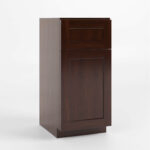
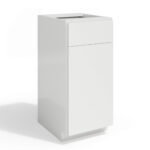
Our frameless lines use plywood boxes, soft-close concealed hinges and soft-close drawers. They include Frameless Modern White Shaker, Frameless Oxford Blue, Frameless Classic Chestnut and Frameless High Gloss White. All of them are on our frameless RTA cabinets page.
What Are the Advantages of Frameless Cabinets Versus Framed Cabinets?
Frameless cabinets give a kitchen a clean, modern look. With no face frame, the doors cover the whole front of each box and line up in one continuous surface, while the hinges stay hidden inside. On seven of our frameless lines you can also choose factory preassembly at the cart, so the cabinets arrive assembled.
Framed cabinets have their own advantages. The solid wood face frame adds rigidity to the front of the box and gives the doors and hinges a solid mounting surface. It also gives each cabinet a framed outline that suits traditional, farmhouse and transitional kitchens.
Framed vs Frameless: The Differences That Matter
Look and Style
This is the difference most buyers notice first. On framed cabinets, the face frame shows as a thin border around the doors, which adds detail and a built-in, classic feel. On frameless cabinets, the doors meet with narrow gaps and the front reads as one flat plane, which is why frameless is the default for modern and minimalist kitchens.
Neither look is better. The question is which one matches the rest of your home. A kitchen that opens into a traditional living room usually sits well with framed cabinets, and a kitchen in a modern home often looks more at ease with frameless.
Doors and Overlay
Overlay describes how much of the cabinet front a closed door covers. Full overlay doors cover most of the cabinet front. On framed cabinets a slim line of the face frame shows between the doors; on frameless cabinets the doors sit side by side with only a narrow gap between them. For a closer look at the door styles themselves, see our guide to cabinet door styles.
Hinges
Both builds use concealed hinges, so you do not see the hinge when the door is closed. What changes is where the hinge mounts. On framed cabinets, the hinge attaches to the face frame. On frameless cabinets, the hinge mounts to a plate on the inside of the box side. This is why face frame hinges and frameless hinges are not interchangeable: each one is made for its own mounting surface. All of our lines use soft-close hinges, so the doors close quietly on either build.
Construction
Both builds start with a plywood box. We do not use particleboard in our cabinet boxes, framed or frameless. Framed cabinets add a solid wood face frame to the front of that box. Frameless cabinets carry the doors and hinges on the box sides themselves. Painted doors on both builds use a solid wood frame with an MDF center panel, which keeps the panel stable and helps the painted finish resist cracking.
Assembly and Delivery
Most of our cabinets ship flat and ready to assemble, and that is true of both builds. The difference is in the options. Seven of our frameless lines offer preassembly at the cart, where our team assembles the cabinets at our facility and delivers them ready to use; those lines arrive in 8–12 business days. Our framed lines and our two high gloss frameless lines ship flat and arrive in 7–10 business days.
Framed or Frameless: Which Should You Choose?
Start with the look you want, then check the practical points.
Choose framed cabinets if:
- Your home leans traditional, farmhouse or transitional, and you want the kitchen to match.
- You like the classic outline a face frame gives each door and drawer.
- You want a classic shaker kitchen, such as our bestselling White Shaker line.
Choose frameless cabinets if:
- You want a modern or minimalist kitchen with a clean, continuous door line.
- You want the doors and finish to carry the whole look, from a white shaker to a high gloss.
- You would like the option to have your cabinets arrive preassembled.
If you are still between the two, compare a framed door and a frameless door side by side in your own kitchen. The difference is easier to judge in person than in photos.
Can You Mix Framed and Frameless Cabinets?
No, keep one build for the whole kitchen. Framed and frameless cabinets are built differently: the doors sit differently on the box, the gaps between doors are different, and each build uses its own hinges and drawer hardware. Side by side, or across from each other on an island, the difference shows in the door lines. If you want two colors, choose two lines from the same build, such as two framed shaker lines; see our ideas for two tone kitchen cabinets.
Framed and Frameless Lines at Buy Wholesale Cabinets
| Build | Our lines | Delivery |
|---|---|---|
| Framed | White Shaker, Shaker Gray, Navy Blue Shaker, Green Shaker, Black Shaker, Dove White Slim Shaker, Slim Oak Shaker and more | Ships flat, arrives in 7–10 business days |
| Frameless | Modern White Shaker, Ivory White, Pearl White, Oxford Blue, Graphite Gray, Classic Chestnut, White Deco | Preassembly available at the cart, arrives in 8–12 business days |
| Frameless | High Gloss White, High Gloss Gray | Ships flat, arrives in 7–10 business days |
Every line uses plywood boxes and soft-close hardware, and every line is sold at wholesale pricing with no program signup.
See Both Builds Before You Order
The surest way to choose is to hold a door in your own kitchen. Order sample doors from the framed and frameless lines you are considering and compare them against your countertops, flooring and wall color. The $2,000 minimum order does not apply to sample doors, and they typically arrive within 2–4 days, depending on your location.
Frequently Asked Questions
What is the difference between framed and frameless cabinets?
Framed cabinets have a solid wood face frame on the front of the box, and the doors and hinges mount to that frame. Frameless cabinets have no frame; the doors and hinges mount directly to the box sides, which gives a modern, continuous door line.
Are face frame cabinets stronger than frameless cabinets?
The face frame adds rigidity to the front of the box and gives doors and hinges a solid mounting surface. Frameless cabinets carry the doors and hinges on the box sides themselves. Both are strong builds, and our boxes are plywood either way.
Are frameless cabinets the same as European cabinets?
Yes. Frameless cabinets are often called European cabinets because frameless construction became the standard in European kitchens first. They are also called full access cabinets.
Can you use face frame hinges on frameless cabinets?
No. Face frame hinges are made to mount on the frame, and frameless hinges mount to a plate on the inside of the box side. Each build needs its own hinge type. Our framed and frameless cabinets ship with soft-close concealed hinges made for their build.
Can you mix framed and frameless cabinets in one kitchen?
No. Choose one build for the whole kitchen, so the door lines, gaps and hardware match. For two colors, pick two lines from the same build, for example two framed shaker lines.
Whichever build you choose, you get plywood boxes and soft-close hardware at up to 40% less than big-box pricing. Browse our framed and frameless cabinets to compare the lines.