

 Sales:
  Customer Service:
What is Butt Hinge?
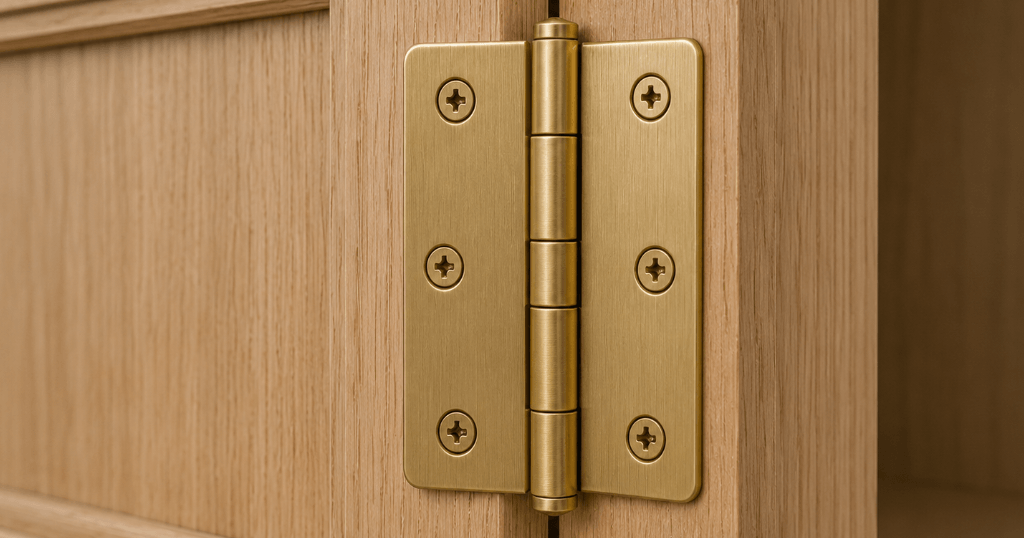
A butt hinge is the classic hinge most people picture when they think of a hinge: two flat metal plates (called leaves) joined by a central pin, mounted so the leaves are visible on the outside of the door and frame. You see them on interior doors, gates, and traditional inset cabinets.
In cabinet doors, butt hinges were once the standard. They are simple, durable, and easy to install. But they have limitations – they are visible (which some people prefer for traditional looks, others dislike), they are not adjustable after install, and they do not soft-close on their own.
Key features of a butt hinge
- Two flat leaves: One mounts to the door, the other to the frame.
- Central pin: The leaves rotate around a vertical pin in the middle.
- Surface mounted: Visible from outside the cabinet when the door is closed.
- Not adjustable: Once installed, the door position is fixed.
- Used on inset cabinets: Common on traditional inset-style cabinetry where the visible hinge is part of the look.
BuyWholesaleCabinets uses 6-way adjustable concealed European-style hinges with built-in soft-close mechanisms across the RTA catalog – hidden inside the cabinet when closed, adjustable after install, and quiet on every close.
FAQ
What is the difference between a butt hinge and a concealed hinge?
A butt hinge is visible on the outside of the door when it is closed. A concealed hinge – also called a European hinge or cup hinge – sits inside the cabinet and is invisible when the door is closed. Concealed hinges are also adjustable after installation; butt hinges are not.
Why don’t modern cabinets use butt hinges?
Three main reasons. Butt hinges are not adjustable, so any error in installation is permanent. They do not soft-close – they slam without an extra mechanism. And they require precise mortising on the door and frame, which is harder to manufacture consistently than the simple cup-hole that European hinges need.
Are butt hinges still used on cabinets?
Yes, on inset cabinets where the traditional visible hinge is part of the design aesthetic. On overlay cabinets – which is the standard for RTA – concealed hinges are nearly universal.
Can I replace butt hinges with concealed hinges?
Sometimes, but it is not straightforward. Concealed hinges require a 35mm cup-hole drilled in the back of the door, which a butt hinge door does not have. If the door has the room for the cup-hole, a switch is possible. Otherwise, you need new doors.
Alex Jordan
Kitchen Cabinet Resources
Kitchen Cabinet Collection
I’ve ordered two kitchens’ worth of cabinets from Buy Wholesale Cabinets, and they are great.