


 Sales:
  Customer Service:
Two-Tone Kitchen Cabinets: Shop Styles, Colors and Ideas

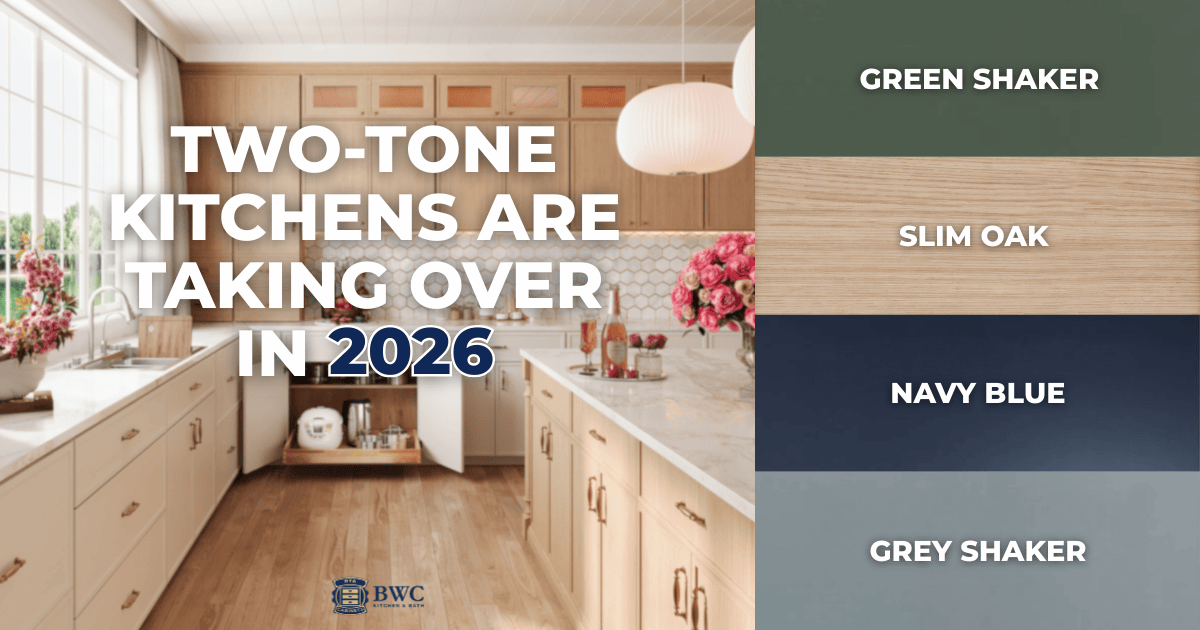
Table of Contents
Two-tone kitchen cabinets use two different colors across your cabinetry, typically one shade on the wall cabinets and a contrasting color or finish on the base cabinets to create depth, define zones, and give a kitchen a custom-designed feel without structural renovation.
This guide covers every dimension of two-tone design: two tone kitchen cabinets ideas, the color combinations that work, how to place colors correctly, which cabinet styles suit two-tone best, and which product combinations match each look.
What Are Two-Tone Kitchen Cabinets?
Two-tone kitchen cabinets means using two different colors or two different finishes across the cabinetry in a single kitchen. The most common configuration is upper cabinets in one color and lower cabinets in a contrasting color, creating a visual break at the countertop line.
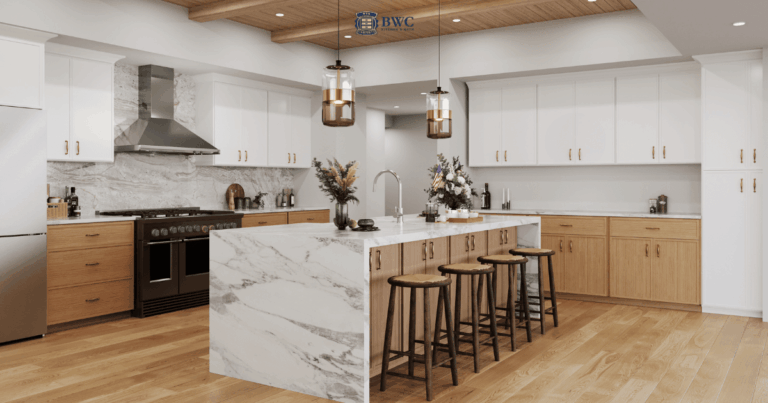
But two-tone design extends well beyond the upper-vs-lower cabinets split. You can also apply it to:
- A kitchen island in a different color to the perimeter cabinets
- A single accent run of cabinets or a pantry in a contrasting finish
- Open shelving on the upper half paired with painted lower cabinets
- A mix of painted cabinets and natural wood on the same run
The result in each case is the same: a kitchen that feels more layered, considered, and custom than a single flat color ever could at a fraction of the cost of structural renovation.
Are Two-Tone Kitchen Cabinets Still in Style in 2026?
Yes, two-tone kitchen cabinets have moved from trend into standard kitchen design practice. They peaked in mainstream visibility around 2019–2021 but have held consistent demand ever since, precisely because the core principle of using contrast to add depth and personality is timeless.
What shifts is which combinations are leading. Gray and white dominated for several years. White and wood took over as the warmer, more organic alternative. Navy lower cabinets became a staple. Now sage green and white oak paired with white or ivory uppers are the current front-runners. The principle stays the same; the palette rotates.
Most Popular Two-Tone Kitchen Cabinet Color Combinations
Some color pairings have become staples of two-tone kitchen cabinets design because they're genuinely versatile - they work across kitchen sizes, styles, and budget levels. Here are the combinations that come up most consistently, along with the products that make each one possible.
| Style Palette | Upper Cabinets (Wall) | Lower Cabinets (Base) |
|---|---|---|
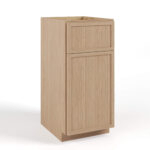
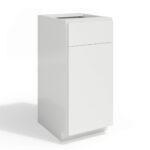
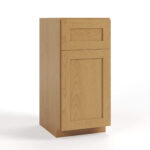
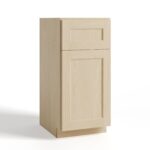
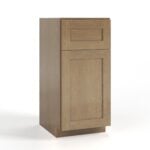
| White and Wood | White Shaker | Slim Oak Shaker |
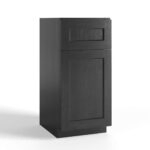
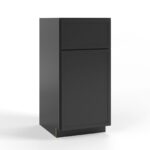
| Black and Wood | Black Shaker | Slim Oak Shaker |
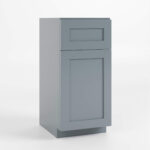
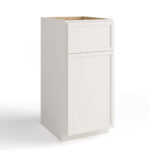
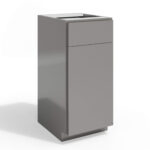
| Gray and White | White Shaker | Shaker Gray |
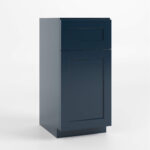
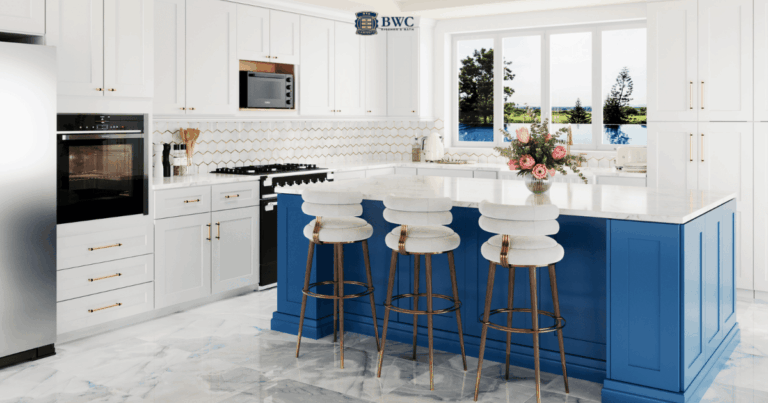
| Navy and White | White Shaker | Navy Blue Shaker |
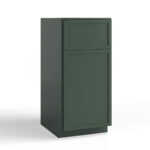
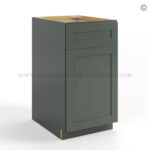
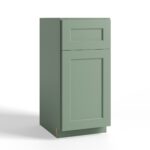
| Green and White | White Shaker | Green Shaker |
Two-Tone Cabinet Styles: Which Door Style Works Best?
The door style shapes the overall character of the kitchen just as much as the color combination. Here's how two-tone design plays out across BWC's available styles.
Shaker Two-Tone Kitchen Cabinets
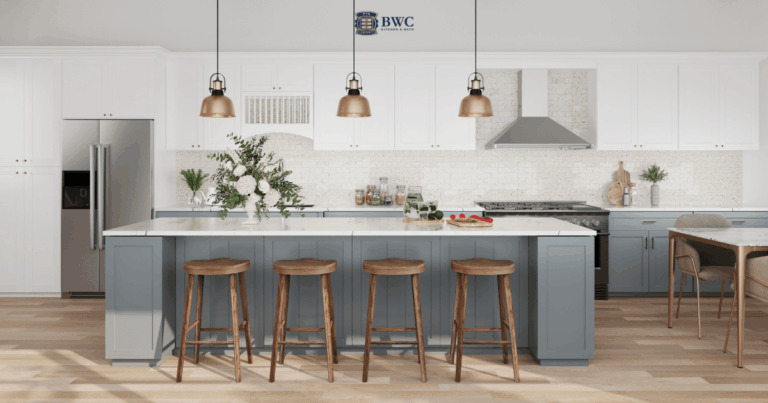
Shaker cabinets are the most versatile door style for two -tone design - they work across modern, farmhouse, transitional, and contemporary kitchens without adding visual clutter. The simple recessed-panel frame gives the door enough detail to carry two colors without letting the other half feel flat. Available in white, gray, navy, black, espresso, and charcoal.
Modern Two-Tone Kitchen Cabinets
Modern two-tone kitchens cabinets pair flat-panel or slim-profile shaker doors with minimal hardware and high-contrast color combinations - gray and white, black and natural wood, charcoal and ivory white. The goal is a kitchen that feels deliberate and uncluttered.
Farmhouse Two-Tone Kitchen Cabinets
Farmhouse two-tone kitchens combine shaker cabinets in warm, muted tones - white, green, gray with vintage-inspired hardware: cup pulls or bin pulls in aged brass or oil-rubbed bronze. The classic farmhouse combination is warm white or cream uppers with wood or sage green lowers, often with open shelving on the upper half.
Base vs Wall Cabinets: Which Color Goes Where?
The near-universal rule in two-tone design: lighter color on the upper cabinets, darker or richer color on the lower cabinets. Upper cabinets sit against open wall space and ceiling: lighter colors here keep the room feeling open and airy. Lower cabinets are anchored by countertop and floor- darker colors here feel grounded rather than heavy.
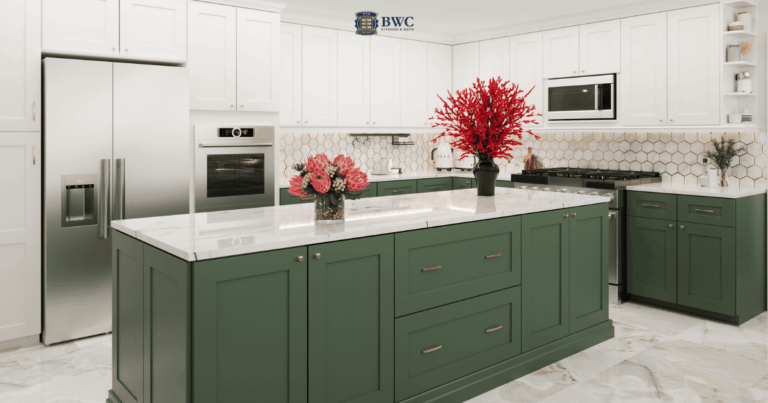
The most common two-tone upper and lower cabinet color combinations are following this rule:
- White Shaker Wall+ Shaker Gray Base: Calm and contemporary
- White Shaker Wall+ Navy Blue Shaker Base: Rich and high-impact, works in any size kitchen
- White Shaker Wall + Slim Oak Shaker Base: Warmth and natural texture from real wood
- Shaker Gray Wall + Espresso or Charcoal Base: Sophisticated, moody, requires a light countertop
When Dark Wall Cabinets Can Work
Dark wall cabinets, charcoal, espresso, deep navy can work in kitchens with high ceilings (above 9ft) and strong natural light. The compensation: very light base cabinets and a pale countertop to bounce light back up. This is a deliberate design commitment, not a default. If your kitchen has standard ceiling height or limited natural light, stick with lighter wall cabinets.
Two-Tone Kitchen Cabinets with a Different Color Island
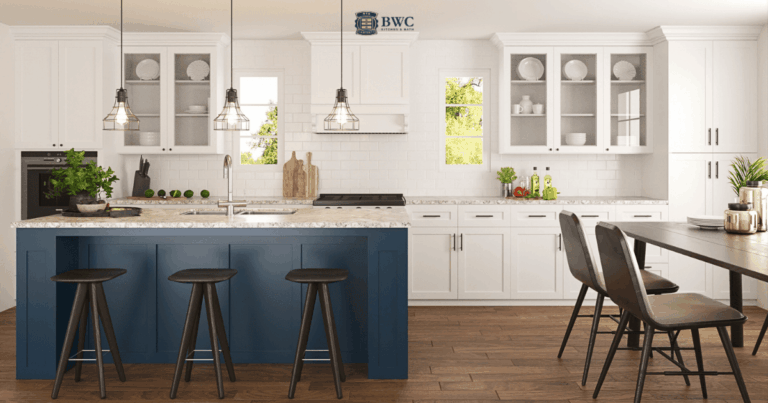
Using the island as the contrast point is one of the most effective two-tone moves - you get the visual impact of a bold color without committing every run of cabinets to it. The island is already a focal point in most kitchens; giving it a distinct color reinforces that role and makes the design feel considered rather than accidental.
Popular two-tone kitchen island combinations
- White Shaker Cabinets + Navy Blue Shaker island: The classic high-contrast island move
- White or Gray Shaker Cabinets + Slim Oak Shaker island: Natural wood island against a painted finish
- White Shaker Cabinets + Black Shaker island: Graphic, modern, works best with a light countertop
- White Shaker Cabinets + Slim Green Shaker island: Green kitchen island as a focal accent
Two-Tone Cabinets in Small Kitchens
Small kitchens are where two-tone design has the most impact relative to effort. The key rule: keep the wall cabinets light. White, off-white, or gray wall reflect light and preserve the sense of ceiling height. The lower cabinets can carry a richer or darker color without making the space feel compressed; they're already visually anchored by the countertop and floor.
Two-tone small kitchen combinations
- White Shaker Wall + Shaker Gray Base: The most neutral and forgiving combination
- White Shaker Wall + Navy Blue Shaker Base: High impact without absorbing light
- White Shaker Wall + Slim Oak Shaker Base: Warmth without visual weight
Design Tips: Getting Two-Tone Cabinets Right
Two-tone kitchen cabinet design has a few principles worth keeping in mind before you commit to a color pairing.
Order sample doors before placing a full order
For two-tone projects, this step is non-negotiable. Cabinet colors shift significantly under different lighting conditions. A gray that reads slate-blue in a north-facing kitchen can look warm and greenish under different light. Test both your upper and lower cabinet color samples in the actual kitchen space, under both natural daylight and your kitchen lighting, before ordering.
Use the 60-30-10 rule as a starting point
In interior design, the 60-30-10 rule suggests splitting a room's color palette into a dominant color (60%), a secondary color (30%), and an accent (10%). In a two-tone kitchen, your cabinet colors are usually your 60 and 30 - the countertop, backsplash, and hardware fill the remaining 10%. This is why very strong two-tone combinations (like black and white) often work: the hardware and countertop provide a third element that ties the two halves together.
60 / 30 / 10 Rule
Two cabinet colors + one accent
The two cabinet colors fill the 60 and 30. Countertop, backsplash, and hardware fill the 10% — the third element that ties base and wall cabinets together.
Consider the countertop as the bridge
The countertop sits between your upper and lower cabinets, which makes it the natural bridge between the two colors. A neutral countertop (white quartz, light marble, gray stone) makes it easier to pair strong colors because the neutral surface breaks the transition. A bold or patterned countertop needs more careful pairing - the countertop itself becomes a third color in the mix.
Match or complement your hardware across both tones
One of the most common mistakes in two-tone kitchens is using different hardware finishes on the different cabinet colors. For example, brushed nickel on the white uppers and matte black on the dark lowers. Unless you're deliberately creating contrast, keep the hardware finish consistent across both cabinet colors. A single hardware finish unifies the design and prevents the two-tone effect from reading as mismatched.
Test paint colors in the actual kitchen light
Undertones in paint colors shift dramatically under different lighting conditions. A gray that looks cool and blue in a north-facing kitchen can turn greenish in warm evening light. Always test paint samples in the actual kitchen, under both natural daylight and your kitchen lighting, before committing. This applies to both cabinet colors.
Buy Wholesale Cabinets Collections for Two-Tone Kitchens
While two-tone design adds the "wow" factor, our construction provides the longevity.
100% Solid Plywood: High-durability frames and boxes, never particleboard.
Premium Hardware: Soft-close hinges and under-mount drawer glides come standard.
Fast Delivery: Your two-tone kitchen ships nationwide in estimated 7–10 business days.
| Cabinet Line | Best Role | Pairs Well With | Recommended Hardware |
|---|---|---|---|
| Shaker White | Wall cabinets - universal | Gray, Navy, Oak, Green, Black, or Espresso lowers | Any Finish (Versatile) |
| Shaker Gray | Wall or base - versatile mid-tone | White uppers for classic gray-white style · Espresso lowers for tonal depth | Brushed Nickel or Black |
| Navy Blue Shaker | Base cabinets or island accent | White or pale gray uppers · Brushed brass hardware | Brushed Brass or Gold |
| Slim Oak Shaker | Base cabinets or island | White or cream uppers · Works modern and farmhouse | Matte Black or Bronze |
| Slim Green Shaker | Lower cabinets or island accent | White or cream uppers · Brass hardware · Farmhouse transitional | Satin Brass or Copper |
| Black Shaker | Lower cabinets (bold) or island | White Wall Cabinets · Light countertop essential | Gold or Polished Chrome |
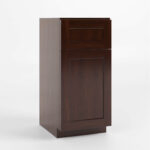
| Espresso / Charcoal | Base cabinets - warm dark alternative | White or light gray uppers · Requires light countertop | Brushed Nickel or Black |
FAQ
Are two-tone kitchen cabinets still in style?
Yes, and they’ve moved well past trend status into standard kitchen design. The combinations shift but the core principle of using contrast between upper and lower cabinets is as popular as ever in 2026.
What is the most popular two- tone kitchen cabinet combination?
The most popular two-tone kitchen cabinet combination is white upper cabinets paired with wood-toned, navy blue, or gray/black lower cabinets. White wall cabinets with natural oak base cabinets and white wall cabinets with navy blue cabinets are the two most ordered configurations at Buy Wholesale Cabinets.
Should upper or lower kitchen cabinets be darker?
Lower cabinets should be darker in almost all cases. Lighter wall cabinets preserve ceiling height and keep the room feeling open; darker base cabinets feel grounded and anchored against the countertop and floor. This is especially important in small kitchens, where dark upper cabinets can make the ceiling feel low and the walls feel close.
How much do two-tone kitchen cabinets cost at Buy Wholesale Cabinets?
Pricing is wholesale, typically 40-60% less than big box store prices for equivalent quality. A complete two-tone kitchen order typically starts around $2,000 (BWC’s minimum first order) and ranges from $3,000-$8,000+ depending on kitchen size and cabinet count. Mixing two colors from the same product line doesn’t add a premium over a single-color order. For an accurate quote based on your kitchen dimensions, contact BuyWholesaleCabinets directly.
Can I order sample doors before placing a full order?
Yes. This is strongly recommended for two-tone projects because cabinet colors look different under different lighting conditions. Order samples of both your wall and base cabinet colors and test them in your actual kitchen space before committing to a full order.
Do two-tone cabinets work in a small kitchen?
Yes, and done correctly, they can make a small kitchen feel more spacious. The key rule: keep the upper cabinets light (white or pale gray). Light uppers reflect light and preserve vertical space. The lower cabinets can carry a richer or darker color without the space feeling compressed.
What hardware finish works with two-tone kitchen cabinets?
Use one hardware finish consistently across both cabinet colors. Matte black is the most universal. Brushed brass suits warmer pairings like white and oak, white and navy, or white and green. Brushed nickel reads cleanest with cooler combinations.