

 Sales:
  Customer Service:
What is a rabbet joint?
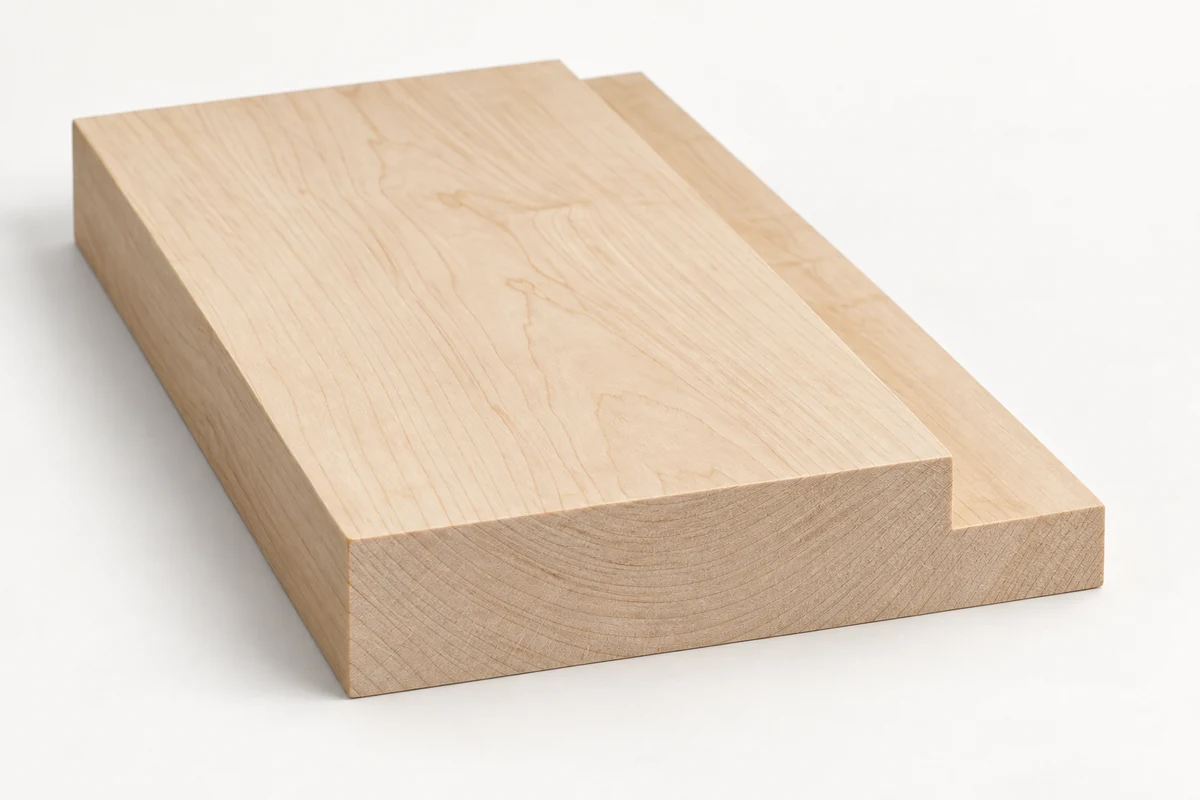
A rabbet is a step-shaped recess cut along the edge of a board, open on one face and one edge, so another panel can drop into the notch. In cabinets, rabbets seat the back panel into the sides of the box and hold glass or panels in a door frame.
The recess gives the joint a shoulder: the mating panel is supported and located, not just glued to a flat surface, which keeps the box square and stiffens the back. It is the close cousin of the dado, a channel cut across the middle of a board; the rabbet is simply that channel moved to the edge, so one wall is open.
Rabbeted backs are a mark of solid casework. Cheaper boxes staple a thin back onto the rear edges; a back set into a rabbet resists racking and gives the cabinet its square.
Why it matters
A back panel set into a rabbet keeps a cabinet box square under load, the reason quality boxes are built this way rather than surface-stapled. See plywood cabinets for the box construction it belongs to.
FAQ
What is the difference between a rabbet and a dado?
Both are square recesses. A dado is cut across the middle of a board with wood on both sides; a rabbet is cut at the edge, so one side is open. A rabbet seats backs and panels; a dado seats shelves.
Are rabbet joints strong?
Yes, for their job. The shoulder locates and supports the mating panel and adds glue area, so a rabbeted back or corner resists racking far better than a butt joint.
Where are rabbet joints used in cabinets?
Most often to set the back panel into the cabinet sides, and to seat glass or a wood panel inside a door frame. Both uses rely on the shoulder to hold the panel square.
Alex Jordan
Kitchen Cabinet Resources
Kitchen Cabinet Collection
I’ve ordered two kitchens’ worth of cabinets from Buy Wholesale Cabinets, and they are great.