

 Sales:
 Customer Service:

What Is a Dado Joint?
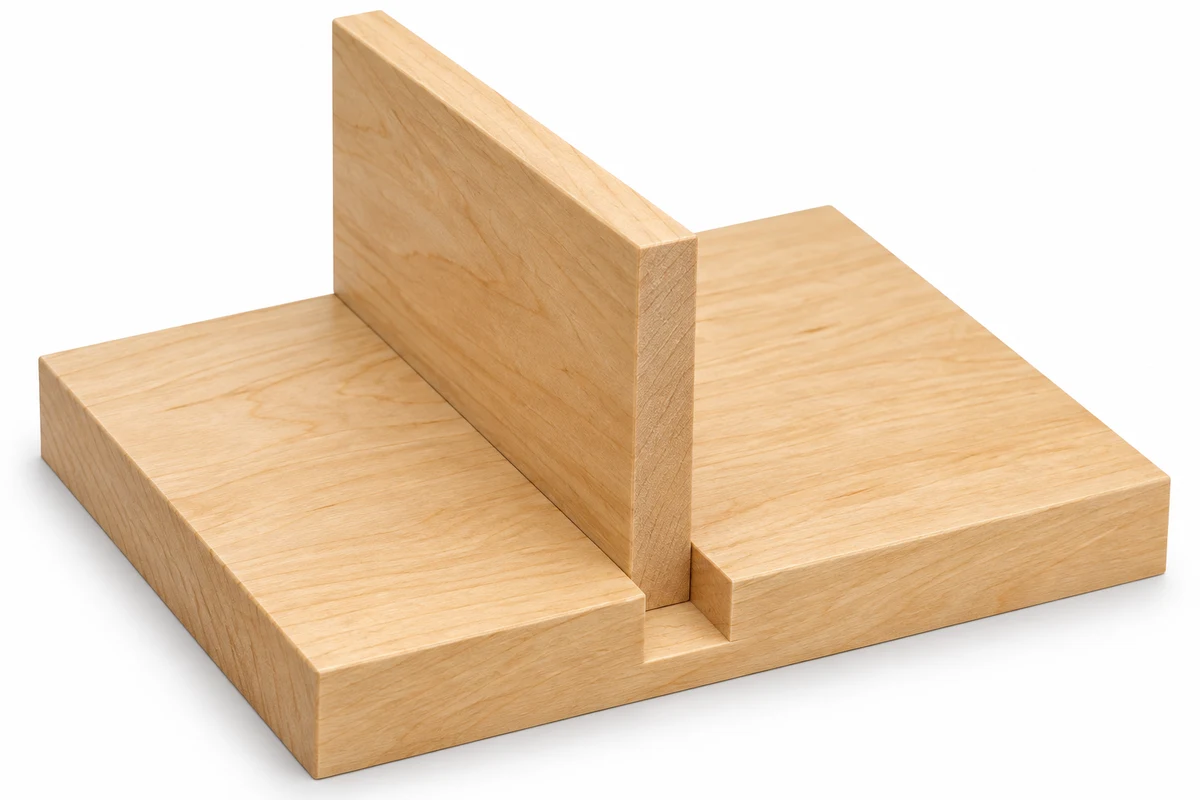
Overview
A dado joint is a square channel cut across the grain of one board so another board can sit inside it. In cabinets, dados hold shelves, cabinet backs, and drawer bottoms, locking the panel in place along its full width.
The dado adds mechanical strength that glue and fasteners alone cannot match: the panel is supported by wood on three sides, so weight pushes into the joint instead of hanging on screws. A channel cut with the grain rather than across it is technically a groove, and a channel open on one edge is a rabbet.
In drawer construction, a groove near the bottom edge of the drawer sides carries the drawer bottom. Budget drawer boxes sometimes rely on dados and staples alone at the corners; better boxes reserve the dado for the bottom panel and join the corners with dovetails.
BWC note
BWC drawer boxes join their corners with solid wood dovetails and ride soft-close glides; the dovetail entry covers that joint. See plywood cabinets for the box construction those drawers live in.
Frequently asked questions
What is the difference between a dado and a groove?
Both are square channels. A dado runs across the wood grain and a groove runs with it. Cabinet shelves sit in dados; drawer bottoms usually sit in grooves.
Are dado joints strong?
Yes. The panel is supported along its full width by the surrounding wood, so a dadoed shelf carries far more weight than one resting on shelf pins alone.
Do cabinet drawers use dado joints?
Often. Many drawer boxes hold their bottoms in a dado or groove. Corner strength is the separate tell: stapled corners mark budget construction, dovetailed corners mark better boxes.
Alex Jordan
Kitchen Cabinet Resources
Kitchen Cabinet Collection
I’ve ordered two kitchens’ worth of cabinets from Buy Wholesale Cabinets, and they are great.